En
En Es
Es

1-Step vs 2-Step at a Glance: Key Facts
| Question | Answer |
|---|---|
| What is a 1-step challenge? | A single evaluation phase with one profit target before you get funded. |
| What is a 2-step challenge? | A two-phase evaluation with split profit targets across both phases. |
| Which is faster? | The 1-step model, since it has only one phase to clear. |
| Which has tighter rules? | The 1-step model often uses tighter drawdown to offset the shorter evaluation. |
| Which suits beginners? | The 2-step model, which rewards consistency over speed. |
| Which costs more in fees? | The 2-step often costs more upfront, but resets can increase the cost of either model. |
What Are 1-Step and 2-Step Challenges?
Both models are evaluation programs that test your trading before a prop firm gives you funded capital. A proprietary trading firm allocates its own money to traders under defined risk rules, including profit targets and maximum drawdowns. The difference between the two models is how many phases you pass to prove your skill.
How the One-Phase Model Works
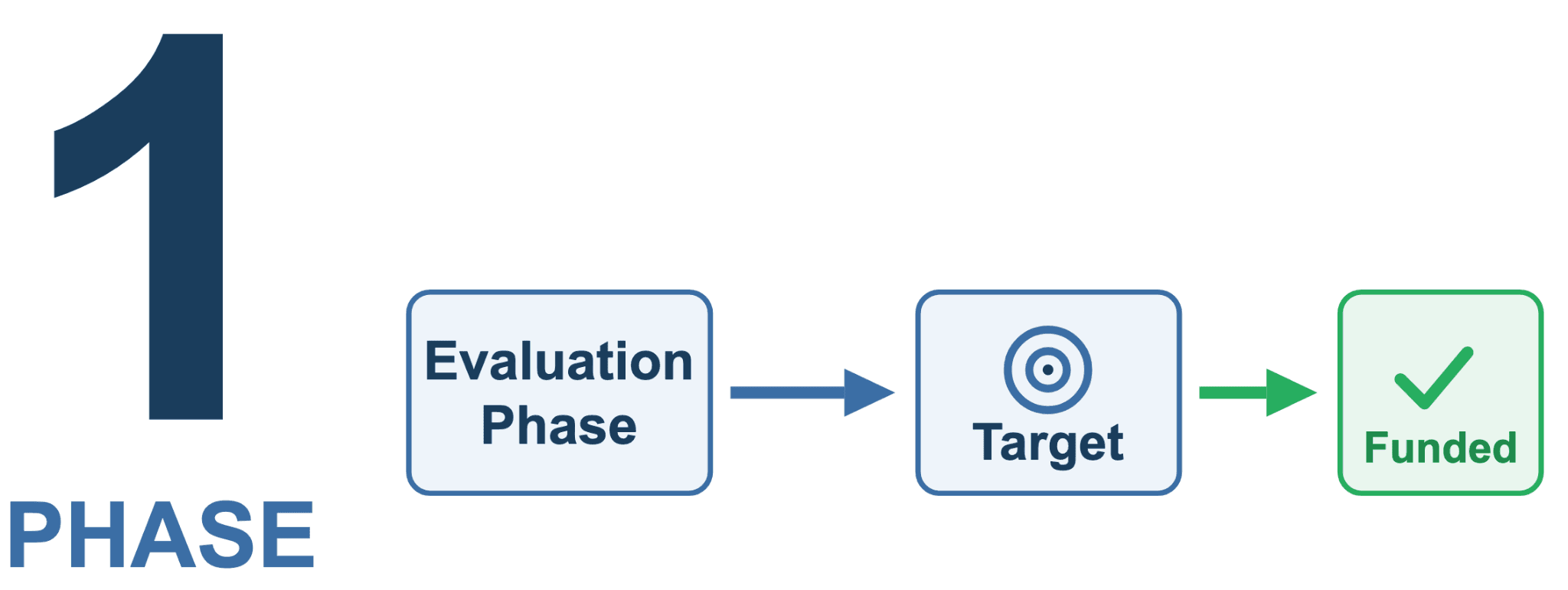
A 1-step challenge gives you a single phase to reach one profit target while respecting the drawdown limits. You trade a simulated account, hit the target without breaking a rule, and qualify for funding. There is no second round to repeat your performance.
Typical 1-step targets range from 6% to 12%, depending on the firm. To balance the shorter evaluation, the drawdown rules are often tighter. This places greater weight on precise execution within a single, concentrated test.
How the Two-Phase Model Works
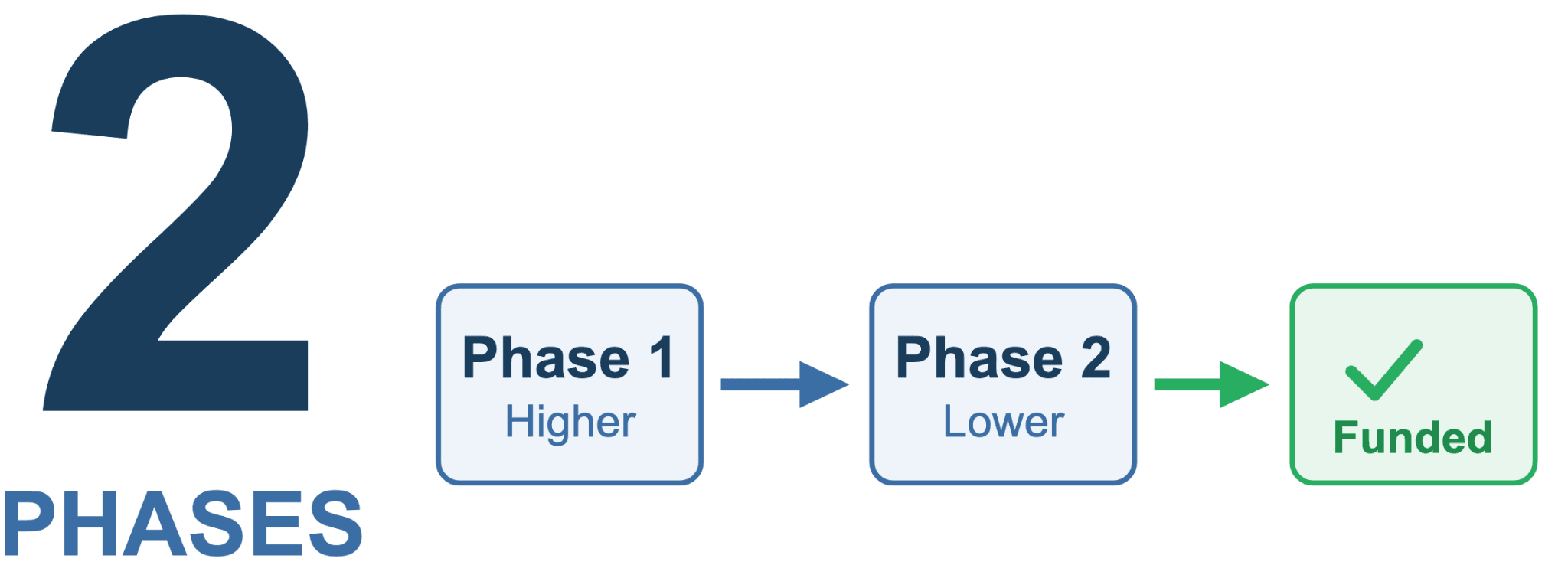
A 2-step challenge splits the evaluation into two separate phases. You hit a profit target in Phase 1, then prove you can repeat the result with a lower target in Phase 2. Both phases enforce the same drawdown limits.
A common structure uses a higher target in Phase 1, often around 8% to 10%, and a smaller target in Phase 2, near 4% to 5%. The two checkpoints filter for repeatable skill rather than a single lucky run. This is the traditional model most prop firms started with.
Key takeaway: A 1-step challenge funds you after one phase, while a 2-step challenge requires two. The one-phase model favors speed with tighter rules. The two-phase model favors proven consistency across a longer process. Both end in a funded account if you pass.
1-Step and 2-Step Challenges Compared Side by Side
The clearest way to weigh the two models is to place their core rules side by side. The table below shows how the one-phase and two-phase structures differ across the factors that matter most. These are typical patterns across the industry, not fixed figures from any single firm.
| Feature | 1-Step Challenge | 2-Step Challenge |
|---|---|---|
| Phases | One evaluation phase | Two evaluation phases |
| Profit target | Single target (often 6% to 12%) | Split target (Phase 1 higher, Phase 2 lower) |
| Speed to funding | Faster | Slower |
| Drawdown rules | Often tighter to offset the short evaluation | Often more room across two phases |
| Pressure | Concentrated in one phase | Spread across two checkpoints |
| Best for | Confident, consistent traders | Traders proving repeatable discipline |
No single row decides the better model. The 1-step wins on speed but demands flawless risk control. The 2-step asks for more time but gives more chances to demonstrate a stable process.
Key takeaway: The headline difference is phases, but the real difference is the rule environment behind them. A 1-step trades speed for tighter limits. A 2-step trades time for more thorough validation. Reading only the phase count misses what actually changes your odds.
Advantages and Disadvantages of Each Model
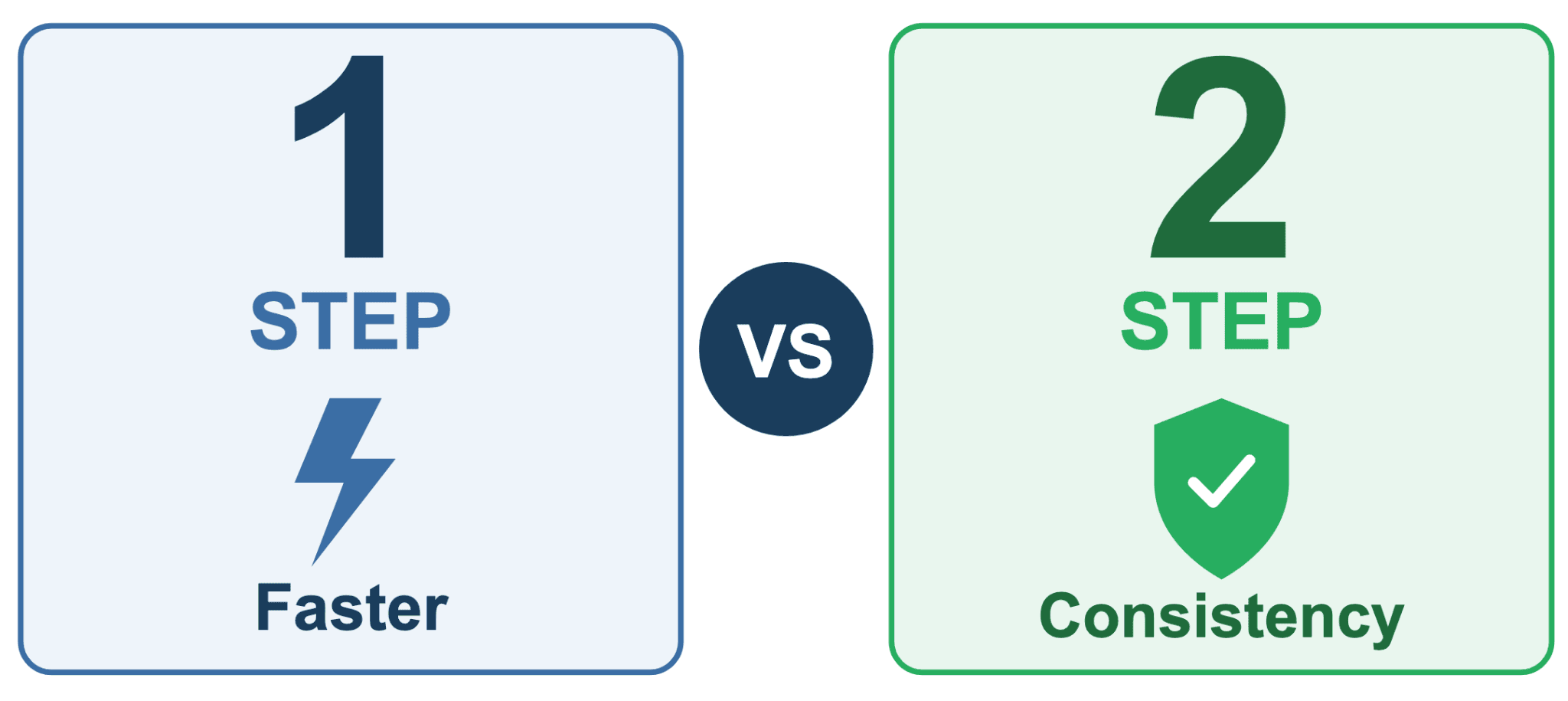
Neither model is better in absolute terms. Each offers a clear set of advantages and disadvantages suited to different trading behaviors. Understanding both sides protects you from choosing on speed alone.
What Are the Advantages of a 1-Step Challenge?
The one-phase model rewards traders who want a direct route to funding. Its main strengths are simplicity and pace.