En
En Es
Es

Fundamental Analysis at a Glance: Key Facts Every Trader Should Know
Before reading further, here are the numbers that define why this approach matters:
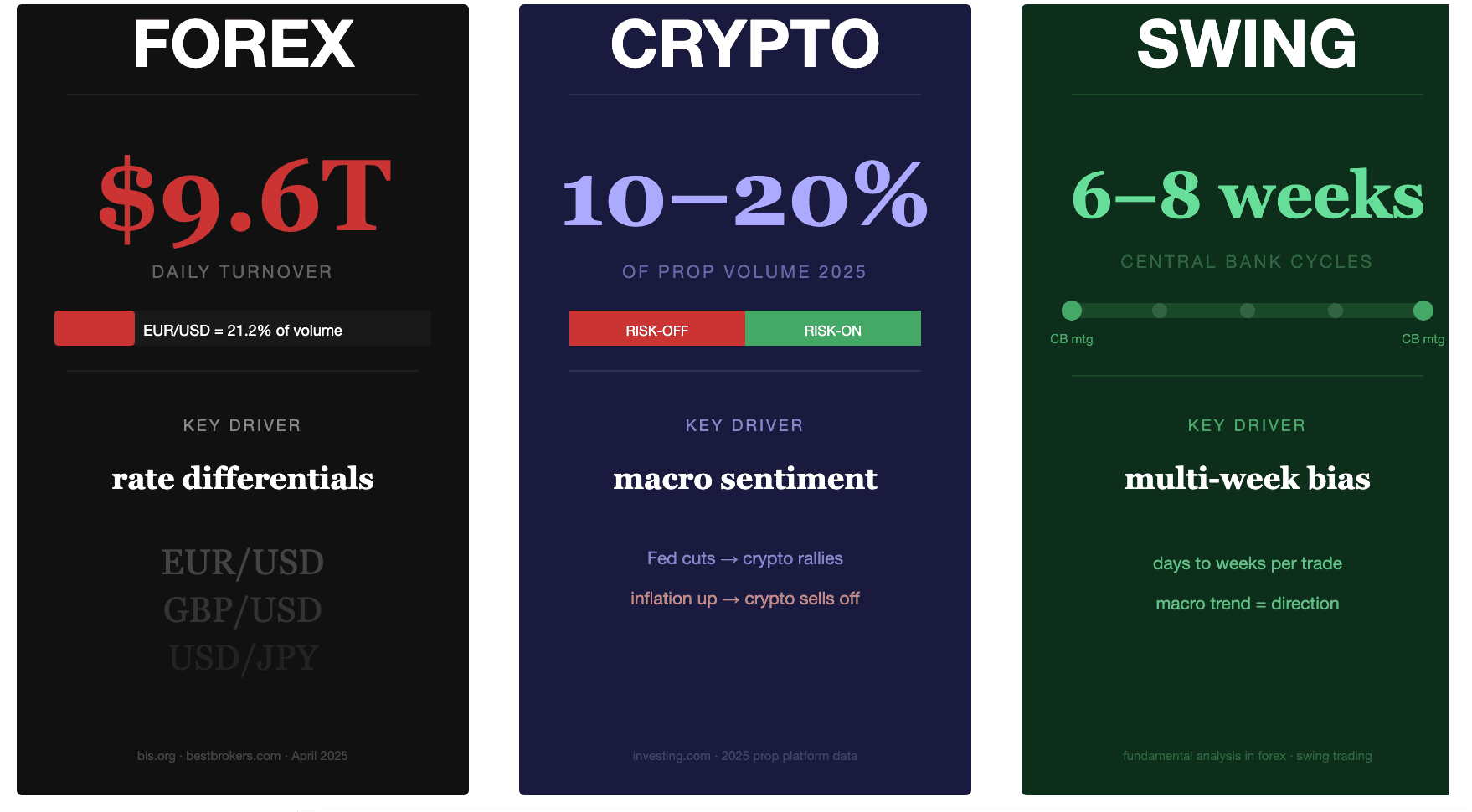
- Forex daily turnover reached $9.6 trillion in April 2025
- Only 7% of 300,000 prop trading accounts achieved payouts
- US Core CPI stood at 2.5% in February 2026, driving Fed rate expectations
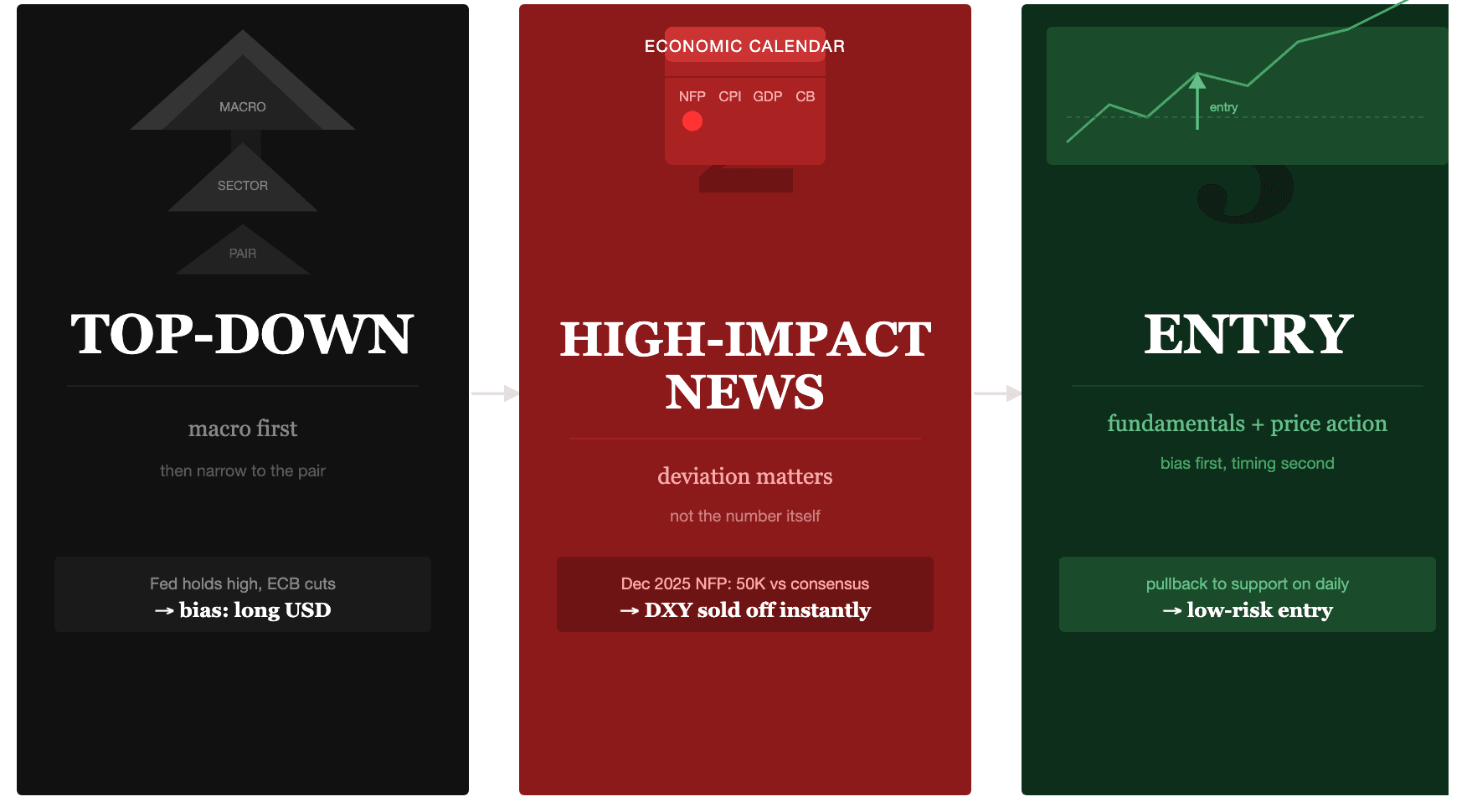
- Jan. 2026 NFP consensus sat at +70K jobs, DXY tested 98.00 support
- A single weak NFP print pushed the DXY toward 97.60 within hours
Strong economy equals more foreign investment. Higher investment equals higher demand for that currency. Higher demand equals a rising price. Each of these numbers marks a moment where the market moved on data, not on a chart pattern. That is the core of fundamental analysis trading.
What Is Fundamental Analysis in Trading
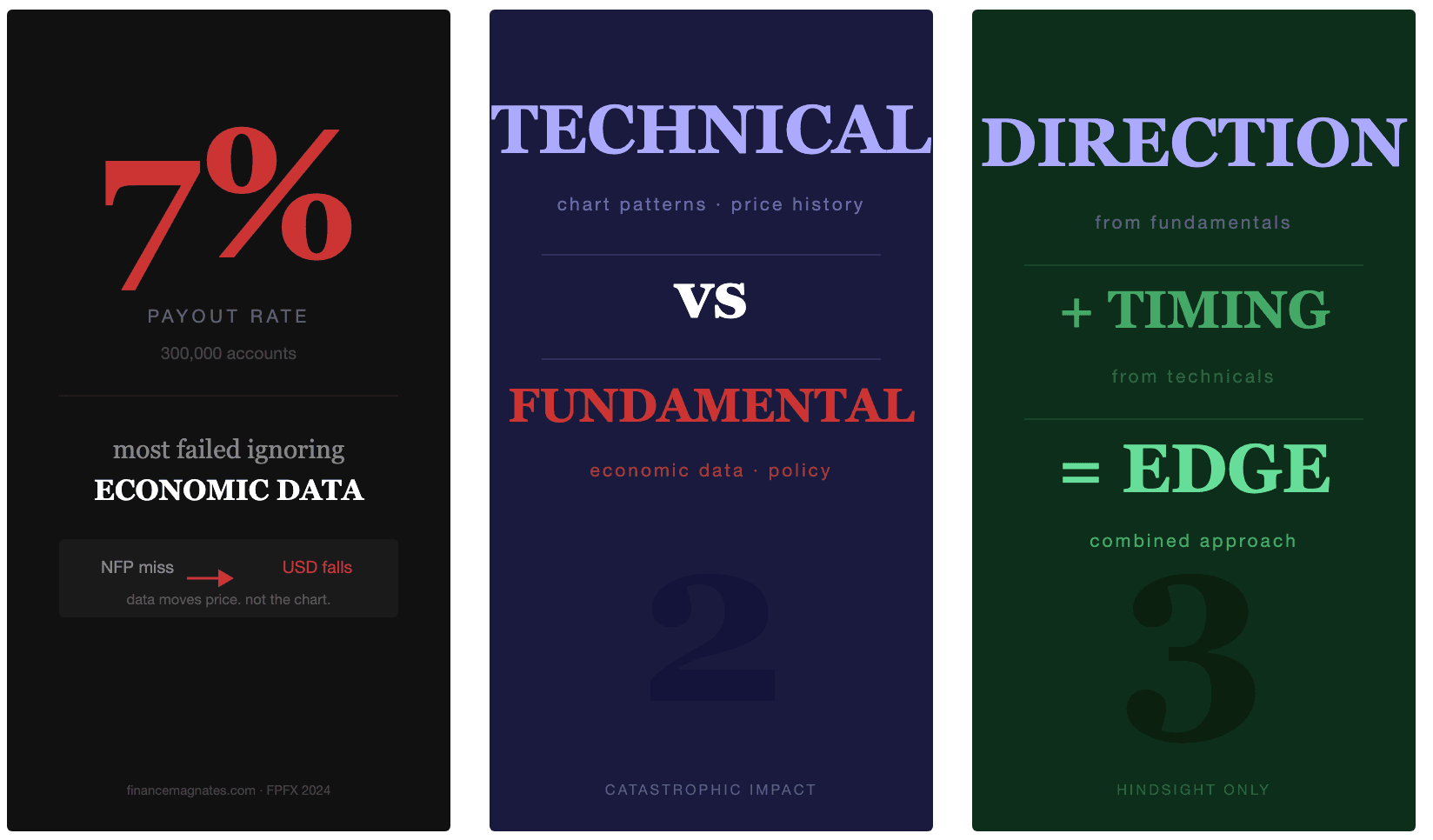
Fundamental analysis reads economic, political, and financial data to understand why an asset trades at its current price. It also signals where the price moves next. Technical analysis reads past price action. Fundamental analysis reads the forces that create price action in the first place. For traders on SuperTrade, mastering both gives you an edge that chart-only traders never develop.
"Price does not move randomly. Every major trend starts with a fundamental shift. The chart shows you where the market went. Fundamentals tell you why."
Fundamental Analysis vs Technical Analysis
Trading fundamental analysis and technical analysis answer different questions. Technical analysis asks where the price has been and where it is likely to go based on that history. Fundamental analysis asks what economic reality justifies the current price level.
Technical traders read charts, indicators, and volume. Fundamental traders read central bank decisions, employment reports, and GDP data. Neither approach works fully without the other.
| Approach | What it reads | Best used for |
|---|---|---|
| Technical analysis | Price history, patterns, indicators | Entry and exit timing |
| Fundamental analysis | Economic data, central bank policy, geopolitics | Direction and bias |
| Combined approach | Both | Higher probability setups |
The most consistent traders use fundamentals to set direction and technicals to time the entry. Relying on one alone means working with half the picture.
Why Ignoring Fundamentals Costs Prop Traders Their Funded Accounts
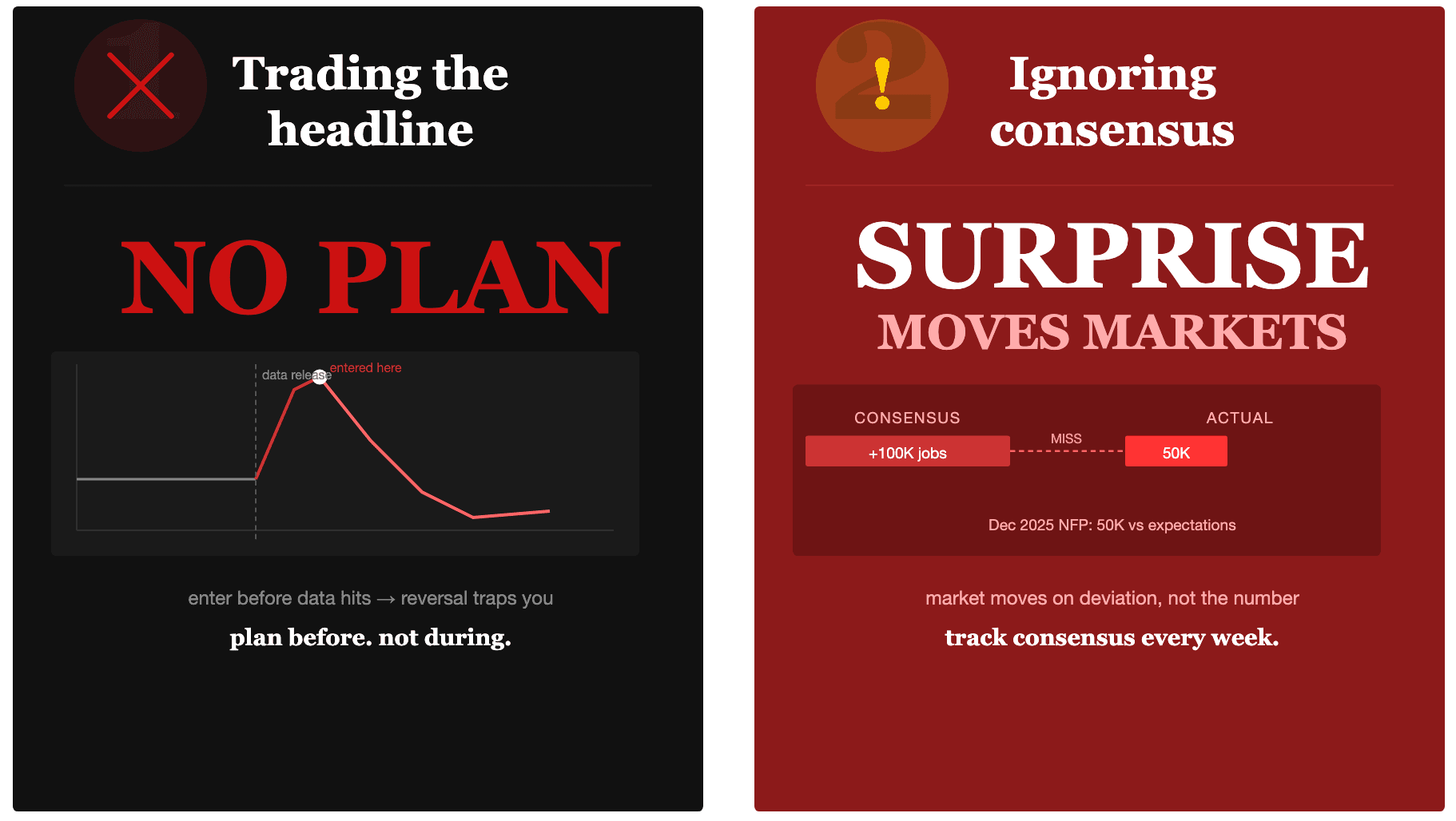
Only 7% of over 300,000 accounts achieved payouts, per FPFX Technology data covering 10 prop firms. Most failures do not come from bad strategies. They come from trading into high-impact news events blind to the direction of the move.
Picture a trader holding a short EUR/USD before a strong US jobs report. The data beat consensus—the dollar surges. The position hits the daily drawdown limit before the trader reacts. That outcome has nothing to do with bad luck. That trader applied no fundamental analysis, meaning in practice.
Traders who track economic releases know which way the market leans before the data hits. They position accordingly or stay flat. That single decision protects the account.
Key takeaway: Fundamental analysis reads the forces that drive price. Technical analysis reads what the price has already done. Prop traders who ignore fundamentals walk into high-impact events blind. That blindness, not a bad strategy, causes most funded account failures.
The Key Indicators in Fundamental Trading
Fundamental trading starts with knowing which releases actually move markets and which ones the market ignores. Not every economic report creates a tradeable event. The ones that do share one feature: they give central banks a reason to change interest rates.
“Rate changes directly affect currency value. Track these three categories above everything else.”
Interest Rates and Central Bank Policy
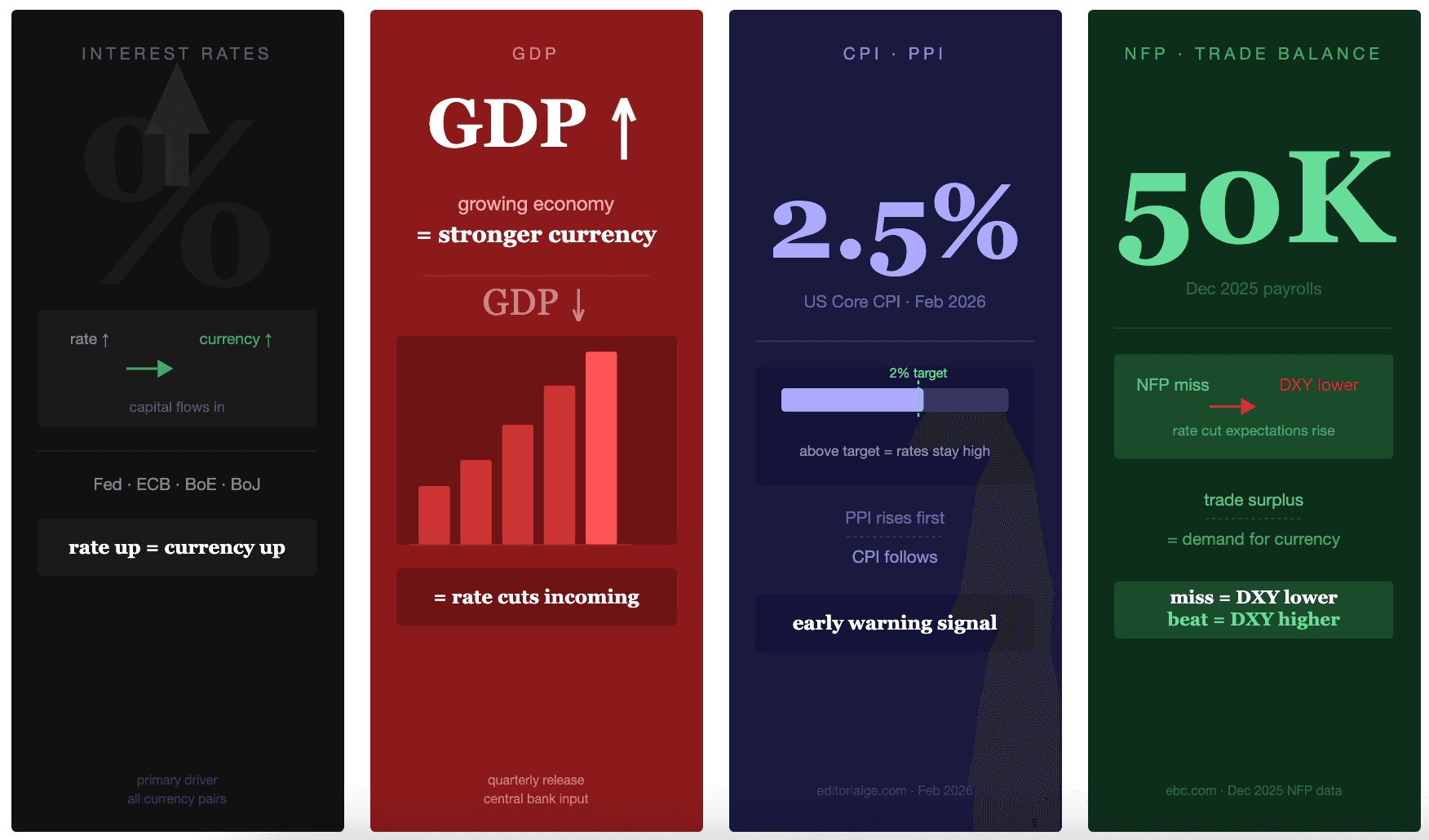
Interest rates sit at the top of every fundamental trader's list. When a central bank raises rates, its currency attracts global capital seeking yield. Demand for that currency rises. The exchange rate follows.
The Fed, ECB, Bank of England, and Bank of Japan all set base rates that drive their respective currency pairs. Traders track not just the rate decision but the language around it. A central bank signaling future hikes turns bullish for that currency before the hike even happens.
In early 2026, the ECB held a higher-for-longer rate stance. That kept EUR yields elevated and drove steady demand for the euro.
GDP and Inflation Indicators
GDP measures total economic output. Rising GDP signals a growing economy and typically a strengthening currency. Falling GDP signals contraction. It pushes the central bank toward rate cuts, which weakens the currency.
The Consumer Price Index tracks the cost of a fixed basket of goods. When CPI climbs too fast, central banks raise rates to cool demand. US Core CPI sat at 2.5% in February 2026. A trader watching that number anticipated the Fed keeping rates higher for longer. That single read pointed toward dollar strength against currencies with falling rates.
The Producer Price Index tracks inflation from the producer side. Rising PPI typically leads to rising CPI in the following months. That gives traders an early signal before the bigger market-moving release arrives.
Employment Data and Trade Balance
Employment reports directly affect rate expectations. Strong jobs numbers mean consumers spend, businesses hire, and the economy needs no stimulus. The central bank holds rates higher. The currency strengthens.
In December 2025, US nonfarm payrolls added just 50,000 jobs with unemployment at 4.4%. That weak reading built market expectations for Fed rate cuts in 2026. It pushed the DXY lower. Any trader tracking that release understood why the dollar came under pressure heading into January.