En
En Fr
Fr Es
Es Prt
Prt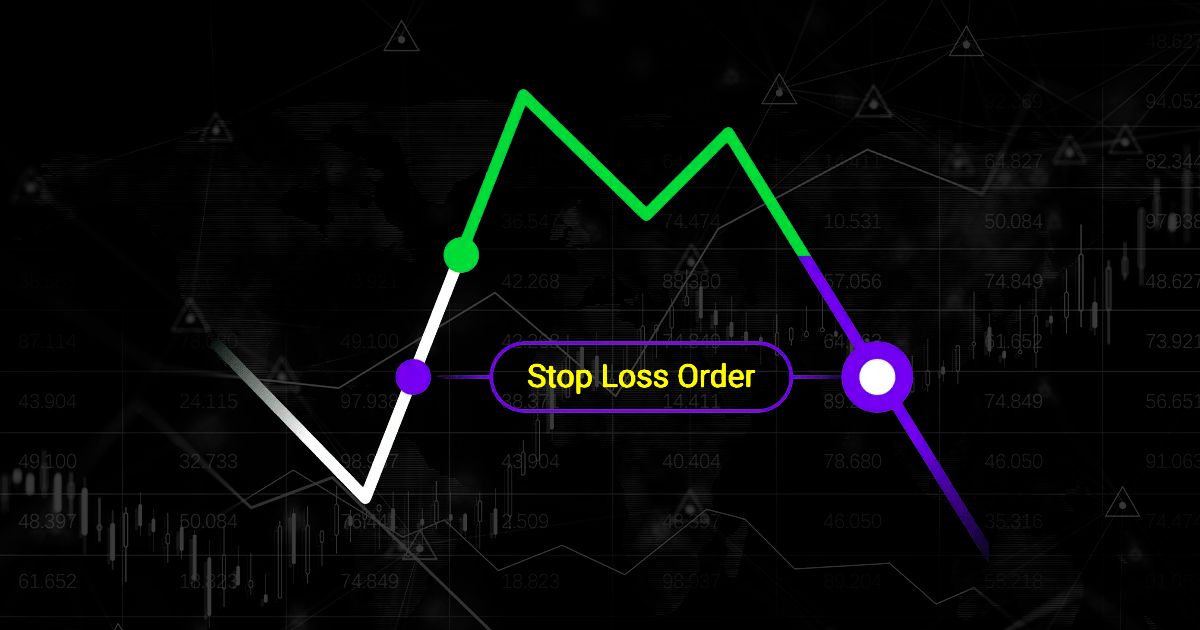
What is Stop Loss in Trading?
If you are a beginner and are starting to trade, you are for sure asking: What is SL in trading? SL simply stands for "stop loss," which is a protective order placed in the market. It automatically closes your trade when the price reaches a certain level to prevent further losses.
The main idea behind a stop loss is simple: you cannot control where the market will go, but you can control how much you are willing to lose. For example, imagine you buy a stock at $100 in the hope that its price will increase. But at the same time, you place a stop loss at $95. If the price doesn’t rise, the trade will automatically close at $95, limiting your loss to $5 per share.
It is very important to know how to place stop losses because markets are unpredictable. Prices can move against you quickly due to news, economic data, or unexpected events. If you don’t place stop losses, you may watch your account balance shrink rapidly. With a stop loss, you know exactly where to exit, which brings peace of mind and discipline.
Stop-loss orders also help to remove emotional decision-making. Many traders panic when the market goes against them, but they still continue holding on to trades that will eventually lose.
Over time, these losses grow bigger. But if you have a preset stop loss, you can eliminate this problem and enforce discipline automatically.
So, a stop-loss order protects your account, helps you to control risks and losses, and allows you to trade with more confidence. Of course, a stop-loss won’t protect you from losses, but it will help you manage them effectively.
Why Trading Without a Stop Loss Is Not a Good Idea
Some traders believe they do not need stop losses. They think they can monitor trades all the time or rely on their intuition to exit at the right time. But the truth is that trading without stop losses is very risky. If you don’t place a stop-loss, you leave your trade open, without any protection. And this exposes you to unlimited losses.
For example, imagine you buy a currency pair because you believe it will rise. Instead, the market starts to fall. Without a stop loss, you may tell yourself, "It will recover soon." But what if it doesn’t? What if bad news pushes the price much lower? Suddenly, a small manageable loss can turn into a huge one and wipe out your account.
Another danger of trading without stop losses is emotional pressure. You can be very stressed if you see that the market moves against you. Many traders make poor decisions under stress: they may double down on losing positions or even refuse to exit at all. This is why the opposite of stop loss often leads to account blow-ups.
Stop losses also give you consistency. If you always protect your trades, your risk per trade is controlled. Without them, your results are inconsistent: sometimes you win, sometimes you lose big. Over time, those big losses can erase months of profits.
Even professional traders who trade large accounts use stop losses or some form of risk control. They understand that no one can be right 100% of the time. Don’t forget also that losses are a part of the game, and you need to learn to accept them.
In short, trading without stop loss protection is dangerous. You may be fine for a while, but when danger comes, you have no way to stop in time. The opposite of stop loss leads to uncontrolled risk, which is why it is never a good idea for any trader.
What is Stop Loss in Trading?
Now, let’s check what is a stop-loss. In the simplest terms, it is an order you place with your broker that automatically closes your trade at a predetermined price. It limits your downside and protects your capital.