En
En Es
Es

Funded Trading Psychology Facts
- People feel losses twice as intensely as equivalent gains.
- Over 80% of day traders quit within two years due to psychological factors.
- Prospect theory shows people take irrational risks to avoid locking in losses.
- FINRA warns: day trading can result in losses for traders with limited preparation.
- Research shows 2.5% of active traders exhibit gambling behavior under pressure.
The Psychology of Trading With a Funded Account
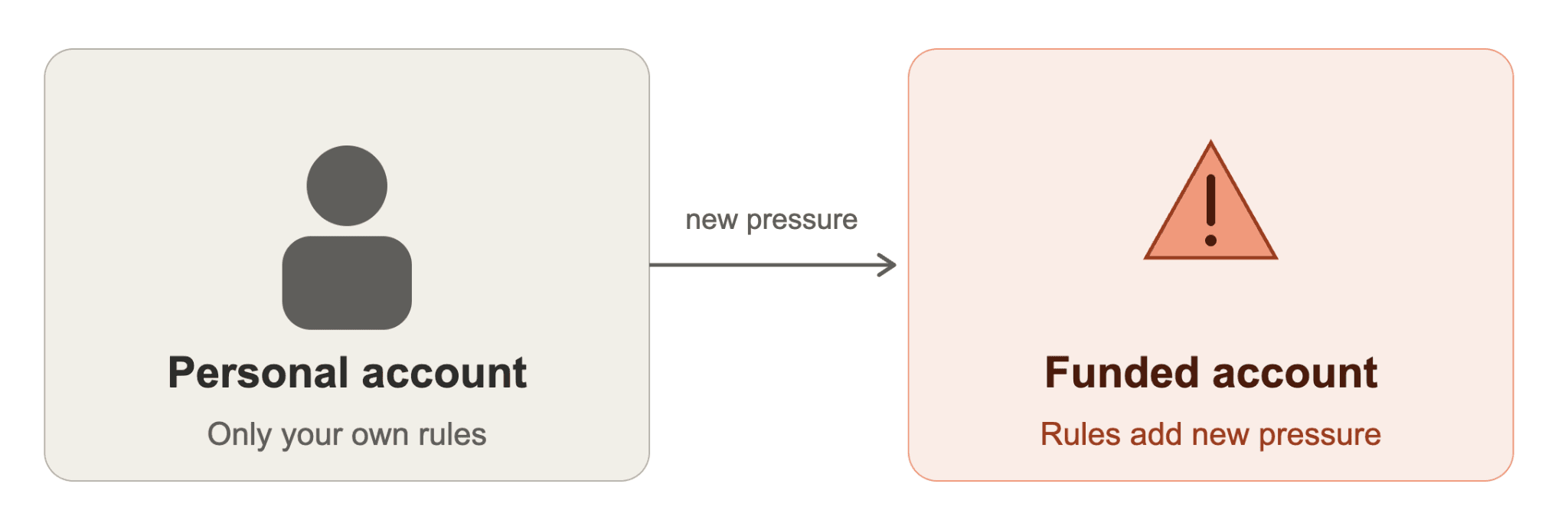
Your strategy does not change after you receive funding. Your execution of that strategy changes completely. The psychology of funded trading shifts because external rules introduce new fears that personal accounts never produced. Drawdown limits, daily loss caps, and profit targets create pressure that no personal account replicates.
How Funded Account Rules Change Your Behavior
Every funded program imposes rules to protect firm capital. Those same rules trigger psychological reactions most traders never anticipate. The table below maps four common rules to the changes they produce.
| Funded Account Rule | Psychological Reaction | Behavioral Result |
|---|---|---|
| Daily loss limit 5% | Fear of hitting the cap | Cuts winners early, skips setups |
| Max drawdown 10% | Survival anxiety | Trades too small for targets |
| Consistency requirement | Daily performance pressure | Overtrades on slow days |
| Profit target 8% to 10% | Urgency to produce fast | Takes low-quality entries |
These reactions follow predictable patterns across every funded program. Every funded trader experiences some version of this during the first live month. Recognizing the pattern before it starts gives you a structural advantage.
The fix is mechanical, not motivational. Set your stop-losses before the session opens each day. Define your maximum trade count per day in writing.
“Discipline means removing the decision from the emotional moment entirely. Written rules turn your job into execution rather than judgment under stress.”
The Dollar Perception Problem
A $500 loss on a $10,000 personal account feels manageable. A $5,000 loss in a $ 100,000-funded account triggers panic. Both represent exactly 5% of the account balance. The math is identical, but your brain processes it differently.
Kahneman received the 2002 Nobel Prize for research on decisions under uncertainty. His prospect theory proved that losses feel roughly twice as painful as equivalent gains feel rewarding. This asymmetry intensifies as dollar amounts grow larger.
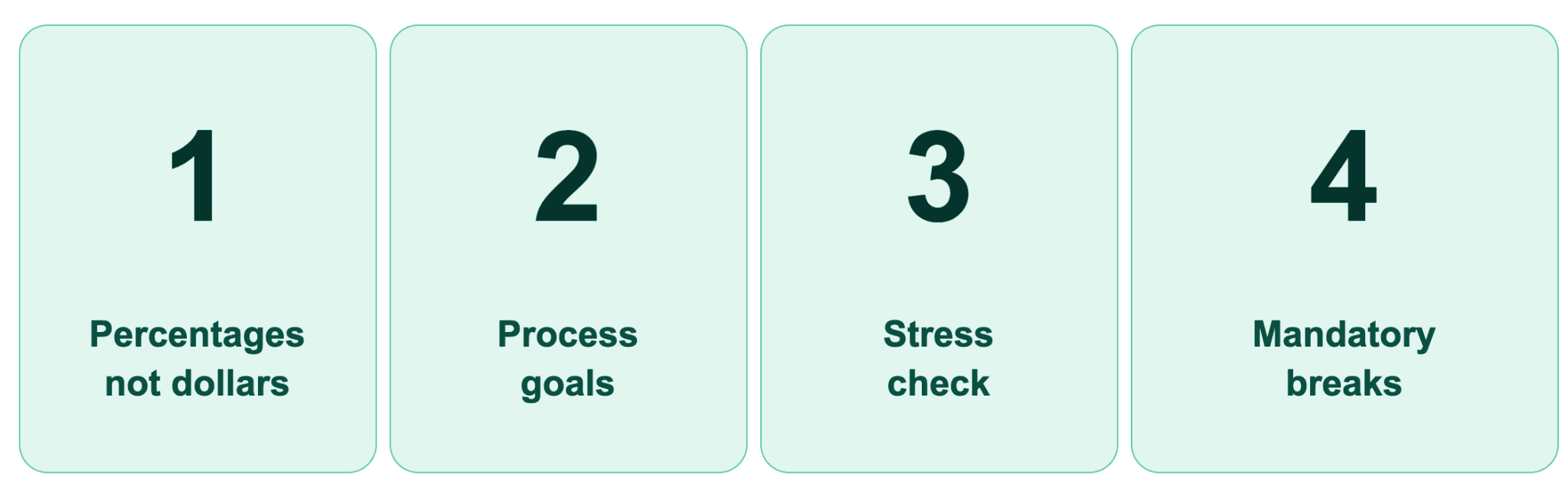
The funded trader sees "$5,000 gone" and panics. The professional sees "5% drawdown, within range" and continues executing. The difference is framing, not ability. Block the dollar P&L column on your trading platform. Display only percentages. This single adjustment reduces the emotional weight of every position.
Some traders start at full size and feel overwhelmed by the dollar swings. A better approach is scaling in over the first month. Begin at 50% of your allowed position size. Increase by 10%-15% each week as you adapt. Within a month, full size feels normal.
Key takeaway: The psychology of trading with a funded account changes because external rules trigger fear responses that personal accounts lack. The dollar-perception problem makes identical percentage losses feel worse on a larger scale. Block dollar P&L, display percentages only, and scale position size gradually over your first funded month.
Why Good Traders Fail With Funded Accounts
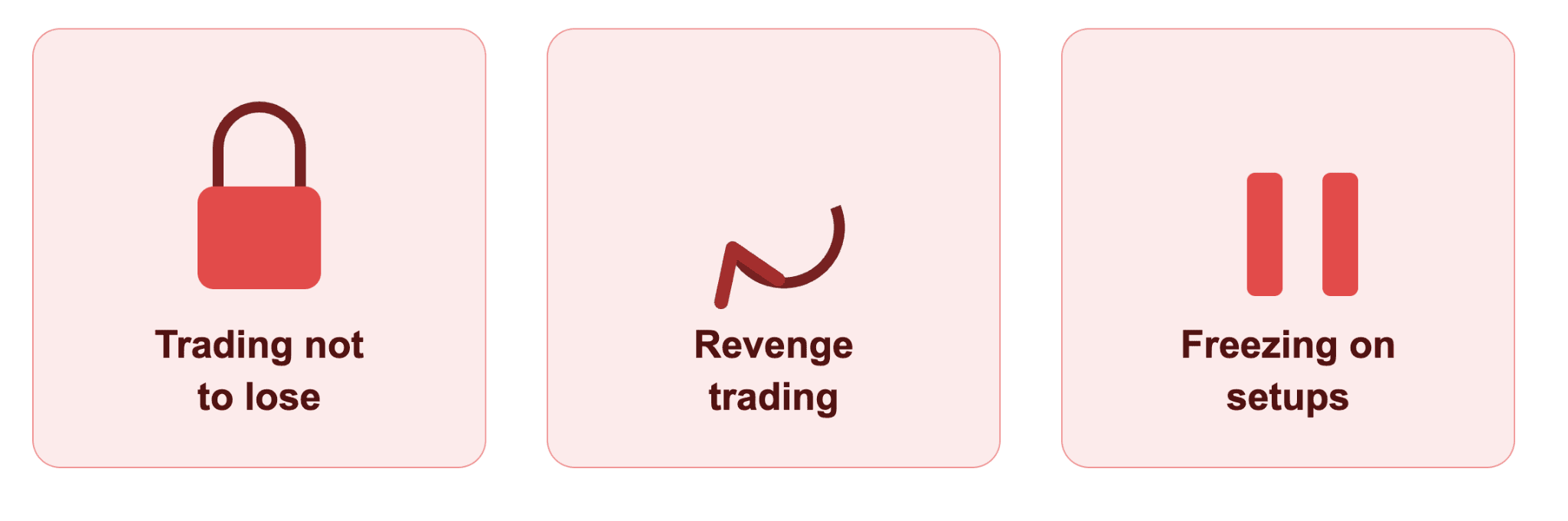
Passing an evaluation proves you can trade under test conditions. Keeping a funded account proves something entirely different. It proves you can trade under real psychological pressure over time. Many traders who pass evaluations lose their funded accounts within 30 days. The factors behind these failures follow the same patterns across all firms and markets.
Trading Not to Lose Instead of Trading to Win
This is the most destructive mindset shift in the psychology of funded trading. Before funding, you traded to execute your edge with confidence. After funding, a new thought takes over. "I must not lose this account" replaces every productive instinct.
The behavioral signs show up immediately and are measurable. You reduce position sizes below what your strategy requires for profitability. You skip valid setups because the fear outweighs the opportunity. You take profits at 0.5R instead of your planned 2R target. Over 50 trades, this pattern makes a winning system unprofitable.
The fix requires a conscious reframe every single morning. Post a reminder next to your screen before every session. Your job is to execute your system, not to protect the account. Discipline protects the account automatically when you follow your rules.
Replace daily P&L goals with execution quality goals immediately. At each session's end, score yourself 1 to 10 on rule adherence. A day with two losses and perfect execution scores higher than three sloppy wins. This reframing moves your focus from the outcome back to the process.
Revenge Trading After Hitting Daily Loss Limits
Every funded trader knows the daily loss limit intellectually. Few handle it well emotionally when they approach it during a live session. The pattern repeats across thousands of accounts every month.