En
En Es
Es

Stop Limit Order at a Glance
| Question | Answer |
|---|---|
| What is a stop limit order? | A conditional order that becomes a limit order once a set trigger price is reached. |
| How many prices does it require? | Two: a stop price that activates the order and a limit price that controls execution. |
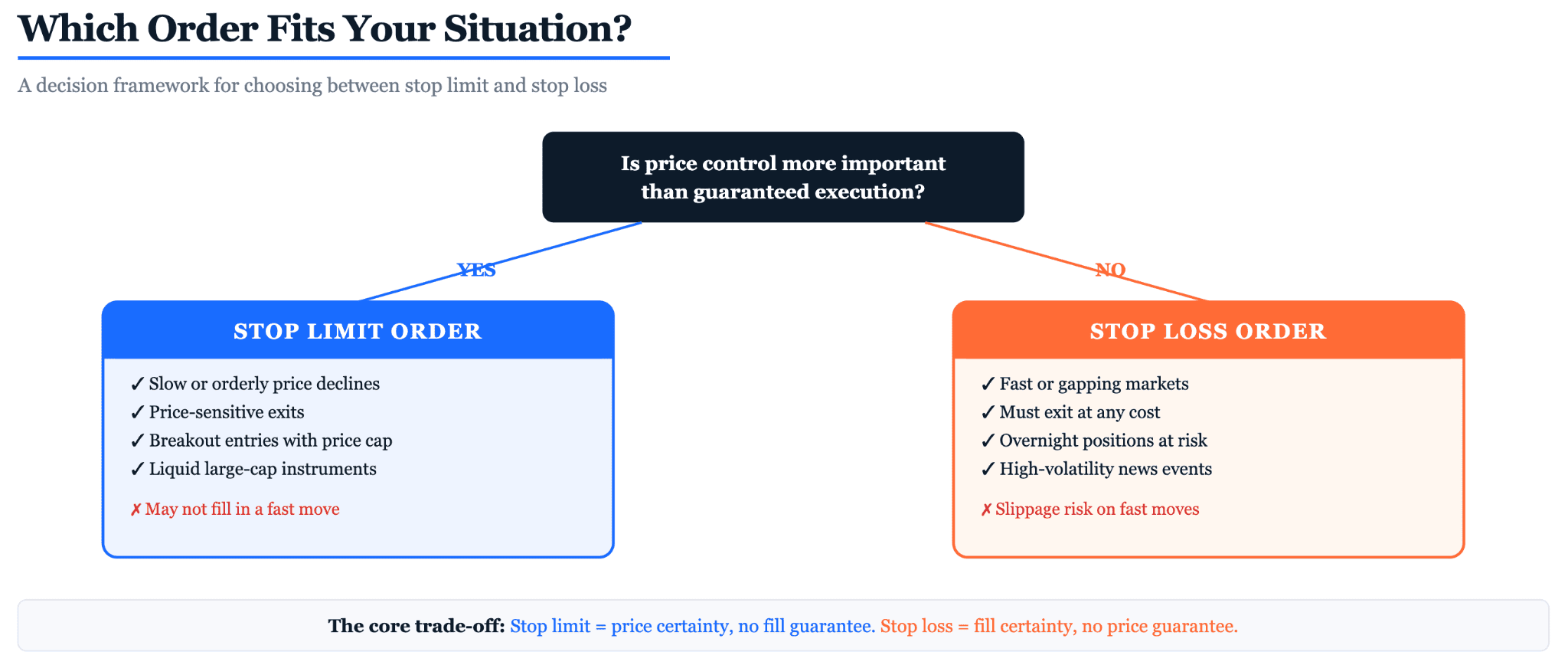
| Does it guarantee a fill? | No. The SEC confirms the limit price may prevent execution entirely. |
| Who regulates it in the U.S.? | FINRA Rule 5350 governs stop limit order handling for all U.S. member firms. |
| When is it most useful? | In volatile markets, where slippage on a plain stop order is a real risk. |
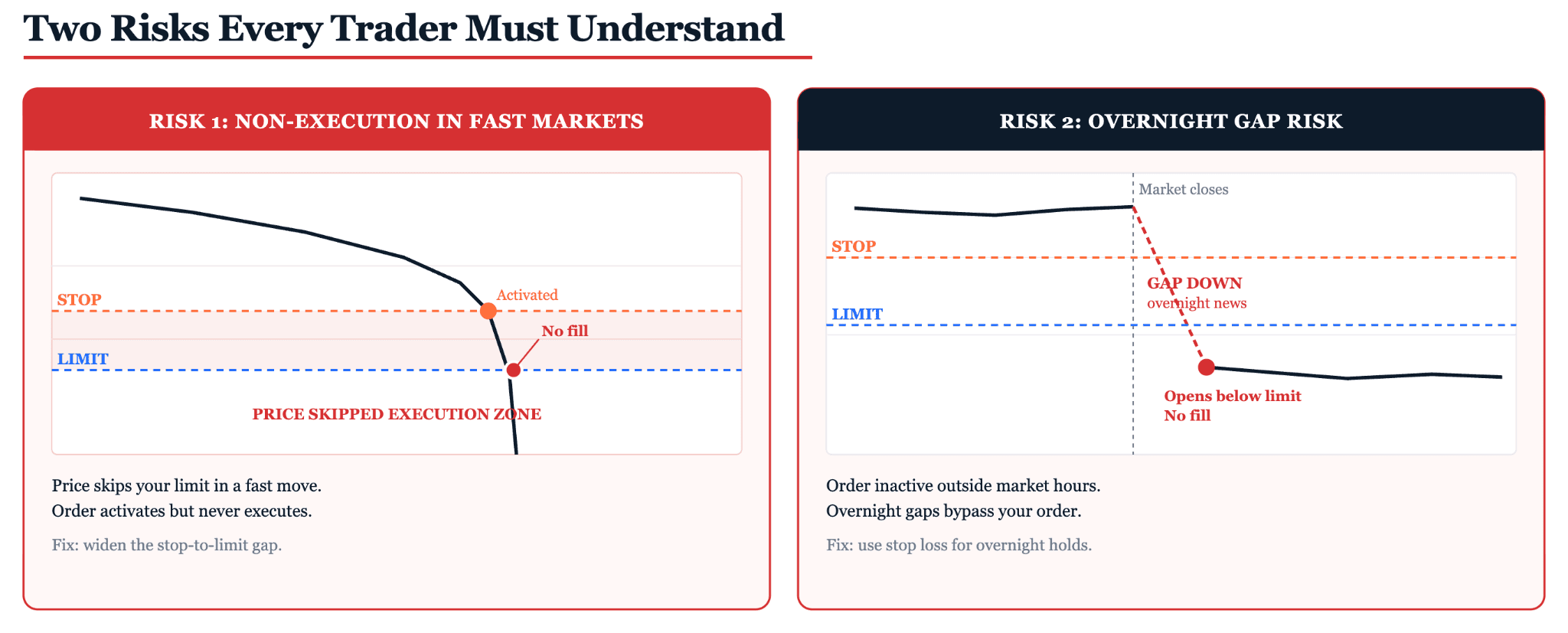
| What is the primary risk? | Non-execution if the price gaps past the limit level before the order fills. |
What Is a Stop Limit Order?
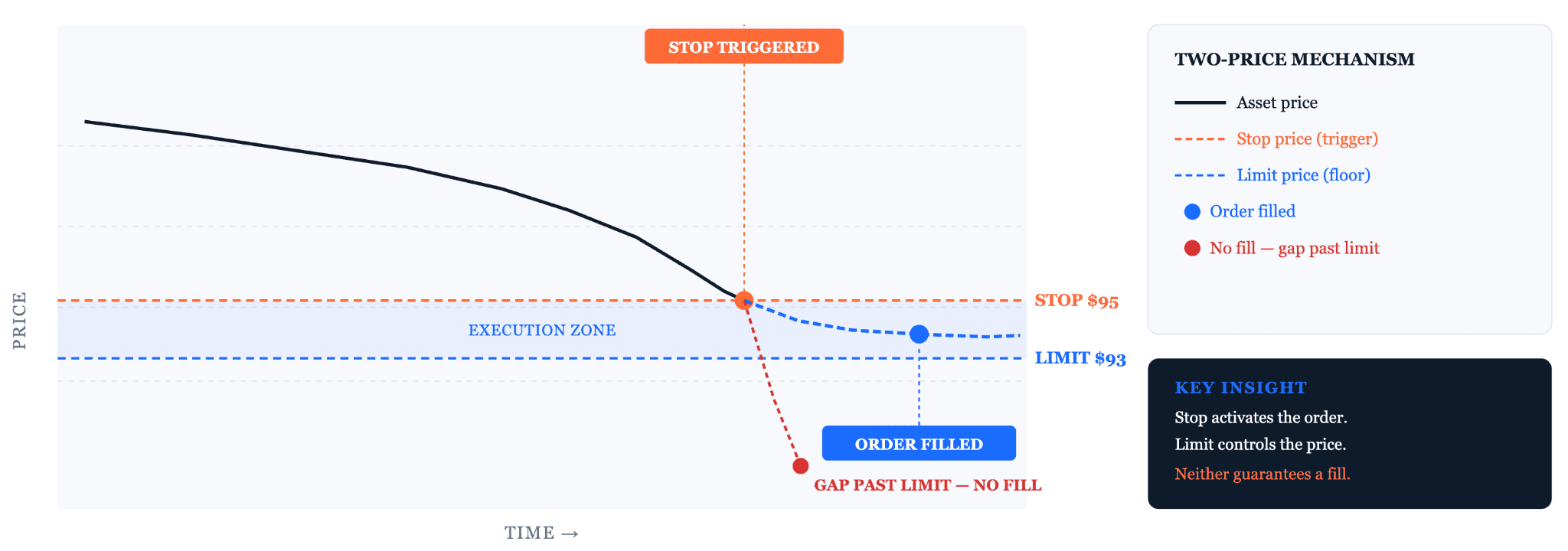
A stop limit order is a two-part instruction to your trading platform. It combines the activation logic of a stop order with the price discipline of a limit order.
The first part is the stop price. This is the trigger. Nothing happens until the asset trades at that level. Once it does, your order activates and becomes a live limit order at the second price you set. That limit order fills at your specified price or at a better price. If the market moves too fast and skips past your limit, the trade does not execute.
The SEC's Office of Investor Education defines this directly: a stop limit order requires execution at the limit price or better, but that same limit price may prevent the order from being filled at all.
Stop Price vs. Limit Price
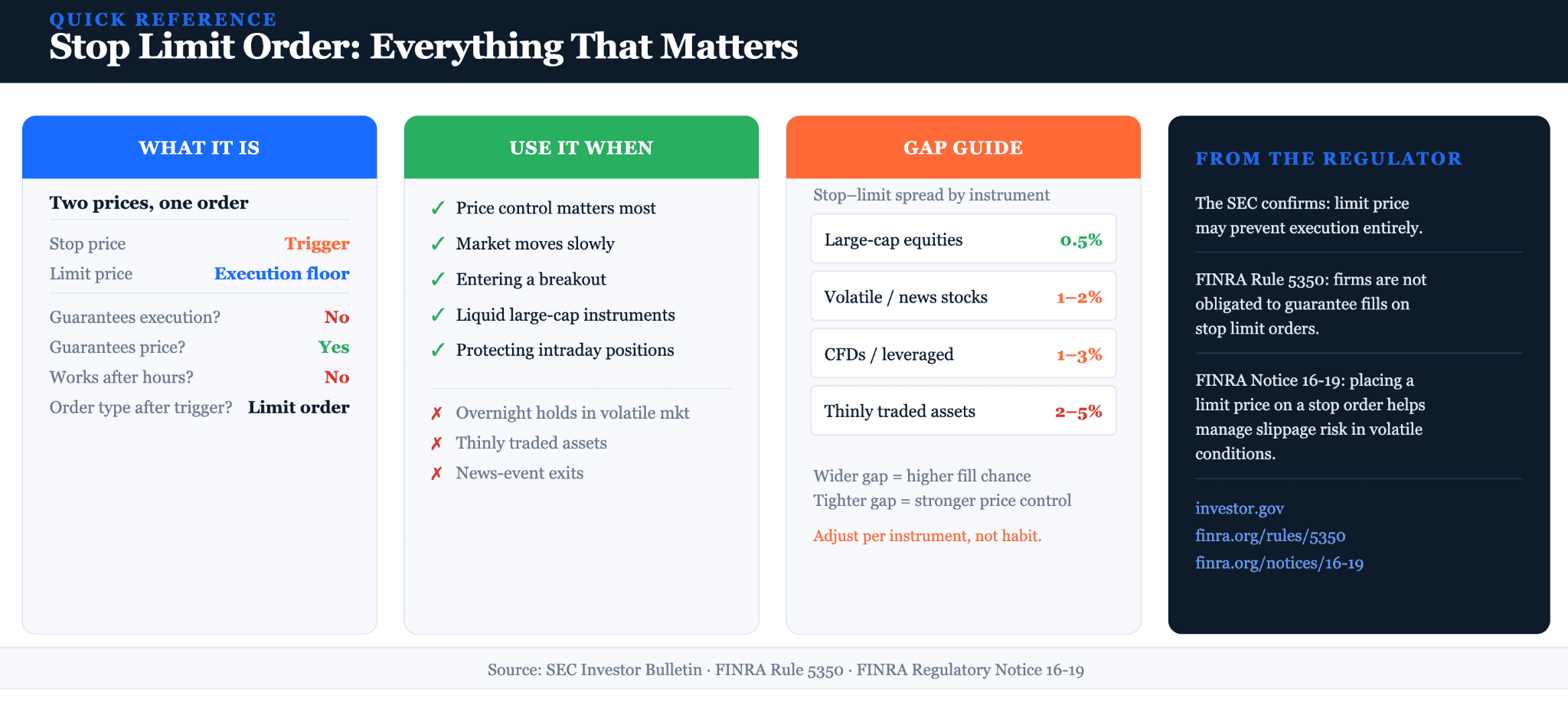
The stop price is the activation level. It tells the market to wake up your order when a specific price is touched. The limit price is the execution boundary. It tells the market the worst price you will accept.
These two prices are set by you when you place the order. They can be equal or separated by a gap. A wider gap between them raises the probability of a fill. A tighter gap gives you stronger price control but increases the chance of non-execution.
Stop Limit Order Example
Suppose you hold a CFD position in a stock trading at $120. You want to exit if the price drops to $115, but you are not willing to sell below $113.
You place a stop limit sell with a stop price of $115 and a limit price of $113. If the stock falls to $115, the order activates. It then places a limit order to sell at $113 or better. If the price drops smoothly to $114 and fills your order, the trade executes. If the stock gaps from $116 directly to $111 overnight, the order activates but finds no fill within your limit range. The position stays open.
Key takeaway: A stop limit order activates at the stop price and executes only at the limit price or better. It gives you full control over execution price.
How Does a Stop Limit Sell Order Work?
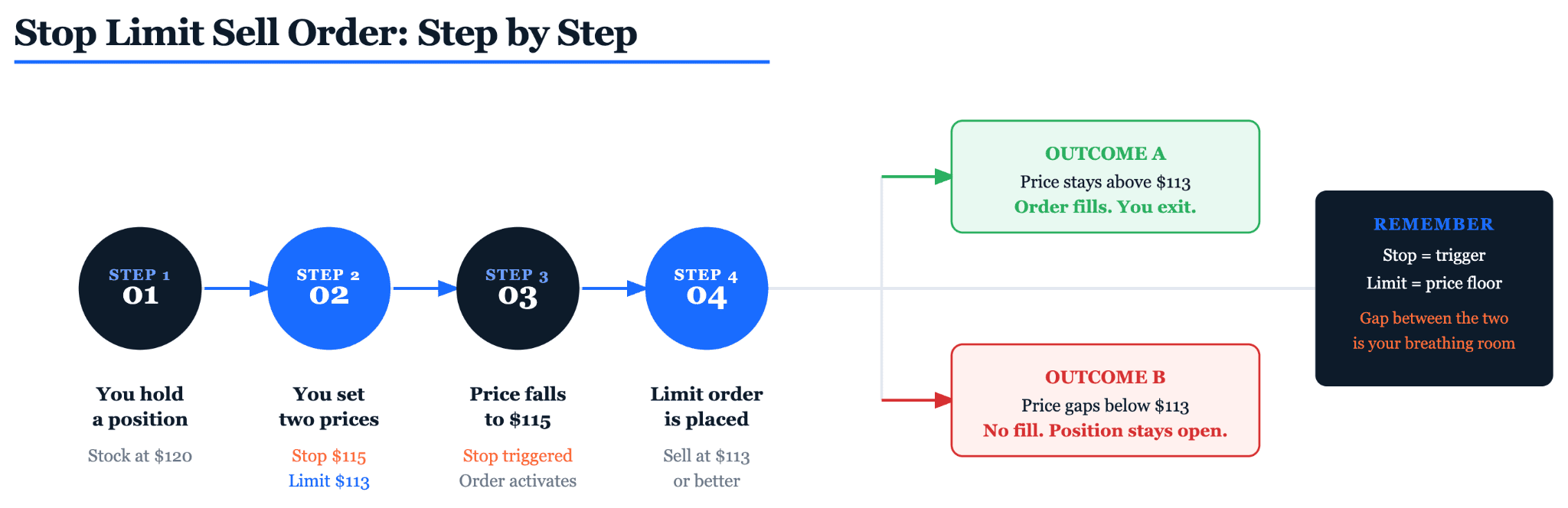
A stop limit sell is the most common application of this order type. Traders use it to exit long positions while controlling the price they receive on exit.
The mechanics follow the same two-step logic. The stop price sits below the current market price. When the price falls to that level, the order converts to a limit order to sell. Execution happens only if a buyer exists at or above your limit price.
"A stop limit sell is not a stop loss. It is a price-controlled exit. If the market drops hard enough, it simply will not trigger."
Setting the Gap Between Stop and Limit
The spread between your stop and limit prices determines how the order performs under pressure. A gap that is too tight leaves you unprotected in a fast market. A gap that is too wide reduces price protection.