En
En Es
Es

What Happens in a Recession at a Glance
| Question | Answer |
|---|---|
| What is a recession? | A broad decline in economic activity lasting more than a few months. |
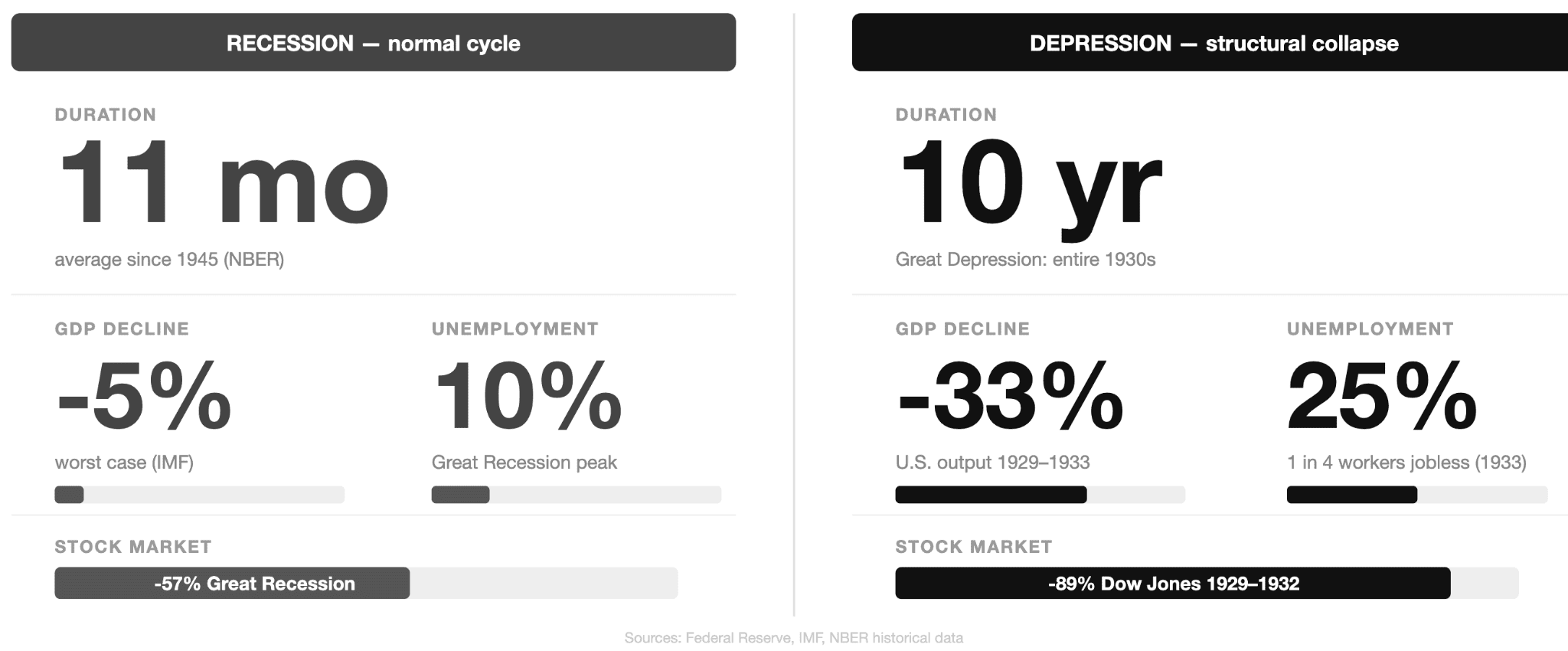
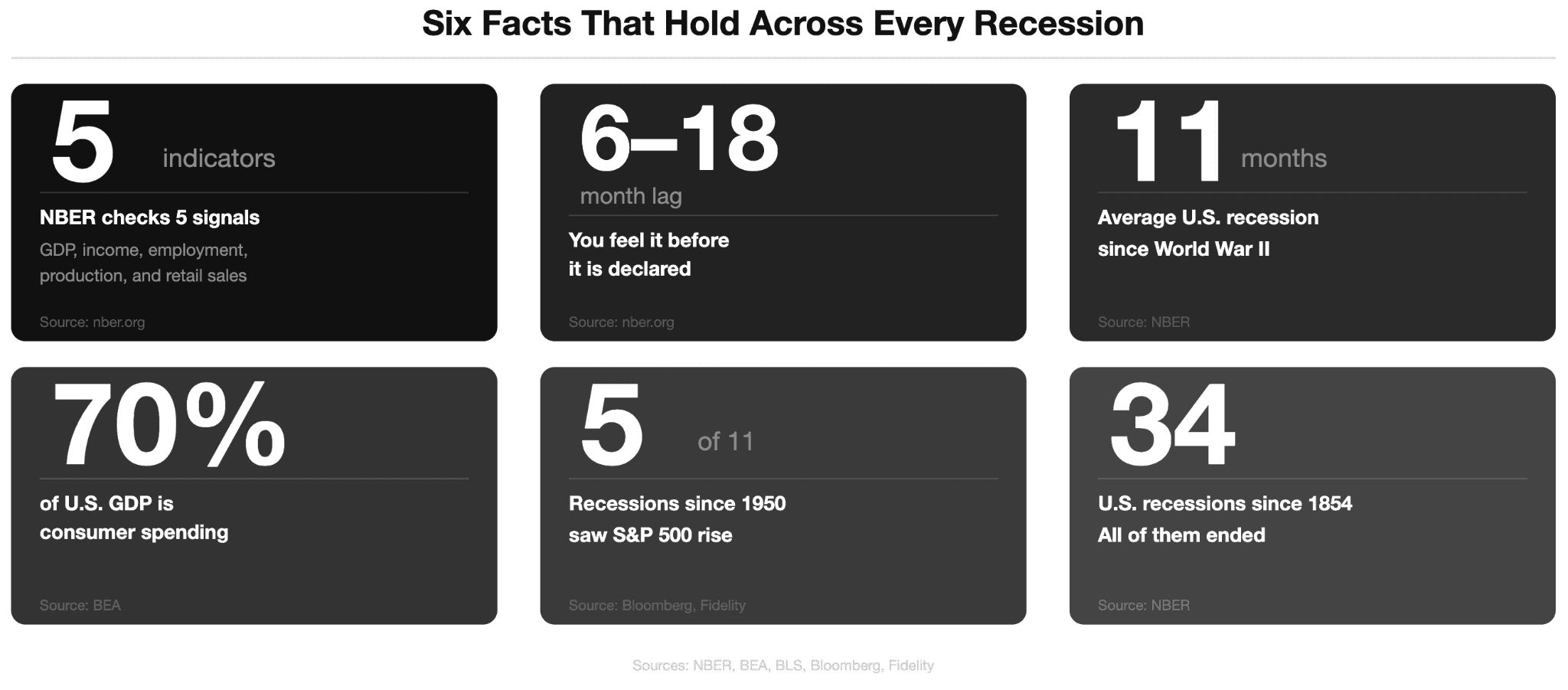
| How long do recessions last? | 11 months on average since 1945 (NBER). |
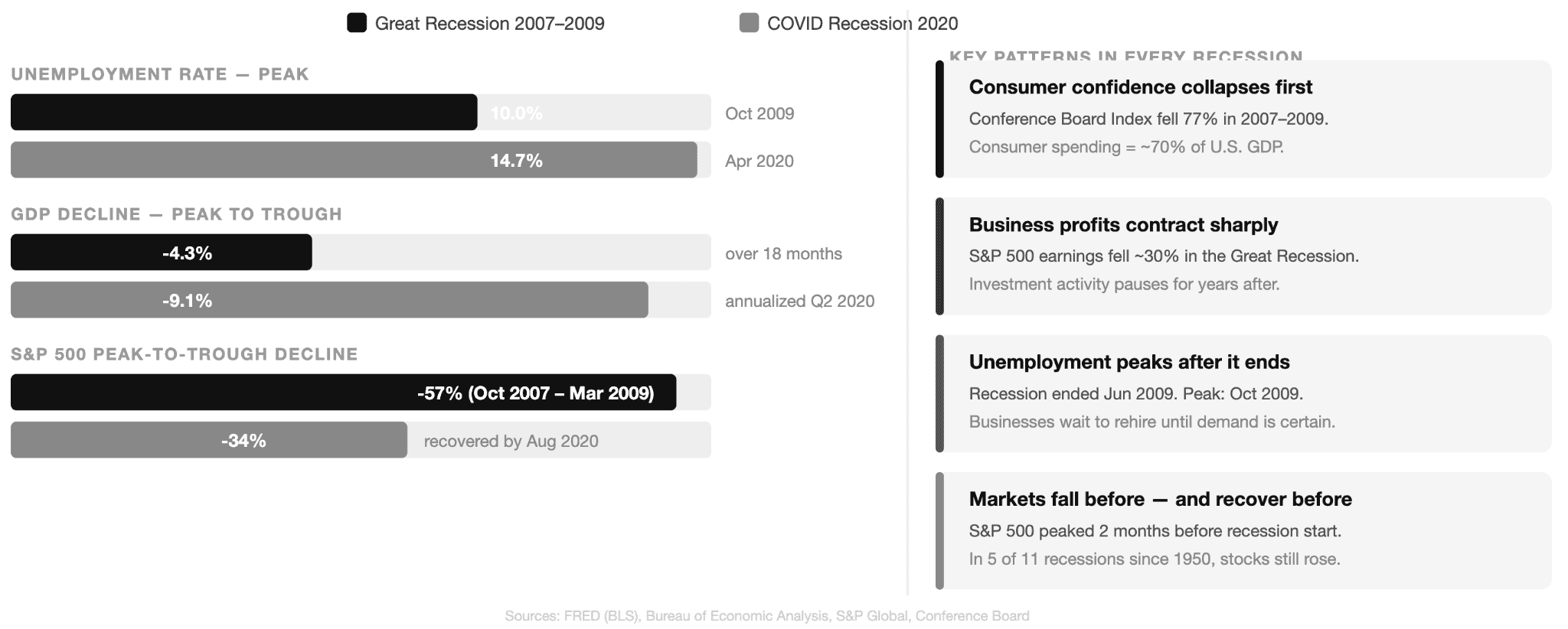
| What happens to unemployment? | Rises; peaked at 10.0% after the Great Recession. |
| How much does GDP fall? | Around 2% in moderate recessions; up to 5% in severe ones. |
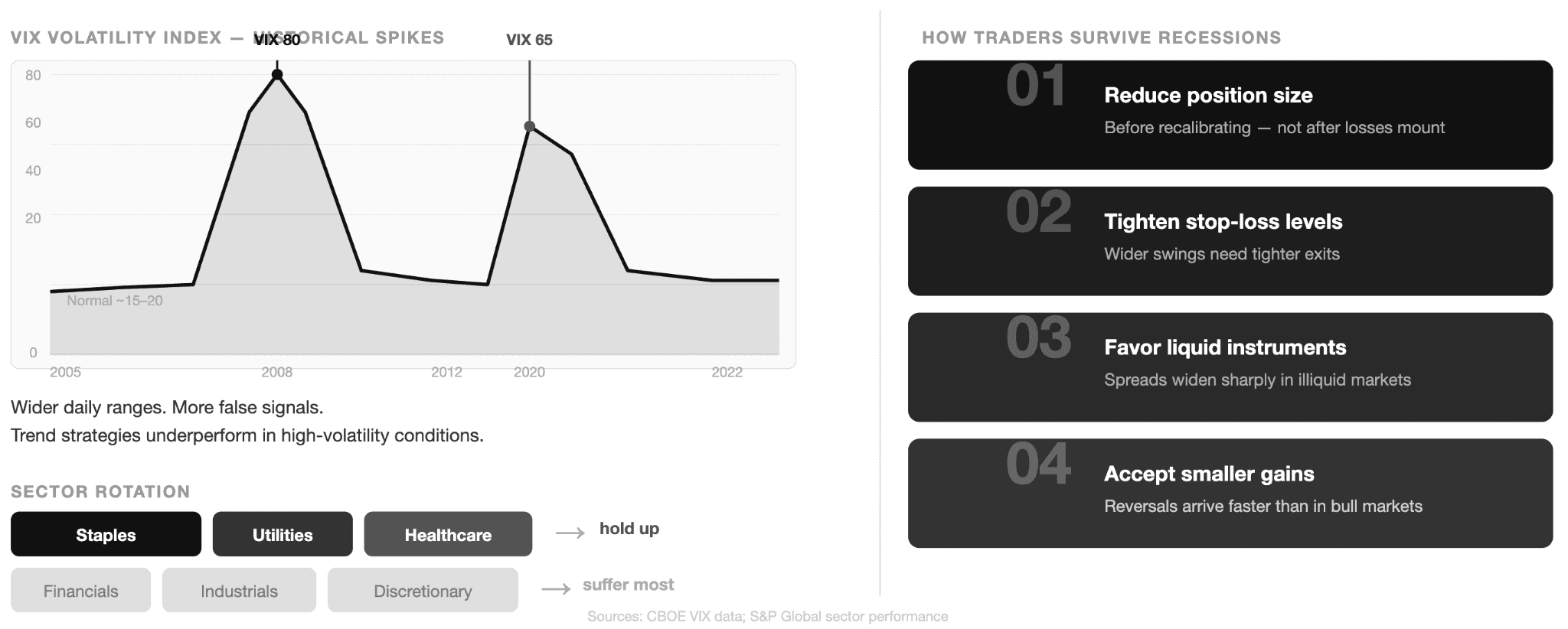
| What happens to stock prices? | Usually falls, but rose in 5 of 11 recessions since 1950. |
| How do governments respond? | Cut interest rates; expand spending and safety net programs. |
What Does It Mean to Be in a Recession?
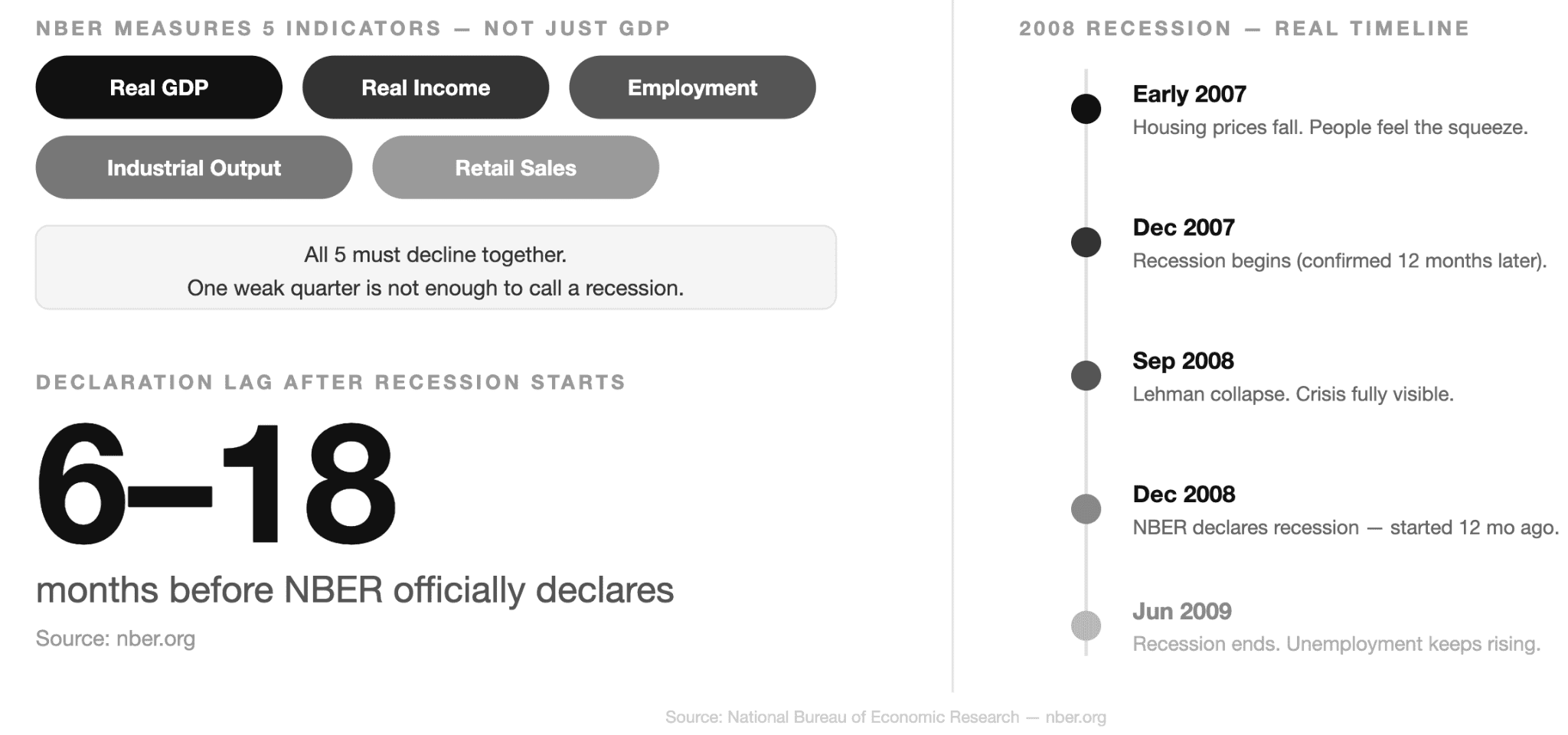
Understanding what it means to be in a recession starts with separating the textbook definition from the real experience. The technical marker most people cite is two consecutive quarters of negative GDP growth.
The National Bureau of Economic Research (NBER), the official U.S. authority on recession dating, uses a broader standard. It weighs real income, employment levels, industrial output, and retail sales before making a call. That process takes time. The NBER typically declares a recession 6 to 18 months after it begins.
How the NBER Defines a Recession
The NBER describes a recession as a significant, broad decline in economic activity lasting more than a few months. No single metric decides it. The committee weighs multiple data streams and only confirms a recession when evidence is consistent across employment, income, and production.
“This matters because what feels like a recession to workers often begins before any official announcement. Hiring slows, hours get cut, and confidence drops months before GDP data confirms the trend.”
Why Official Data Lags Behind Real Experience
GDP figures are revised multiple times after initial publication. A quarter that appears to show growth can be revised downward weeks later. This lag means businesses and households feel instability before economists can measure it. The 2008 recession began in December 2007. Most Americans felt the damage from the housing collapse months earlier.
Key takeaway: A recession is not just a statistical event. It starts in the decisions people and businesses make when confidence falters, often long before any official declaration arrives.
How Does a Recession Happen?
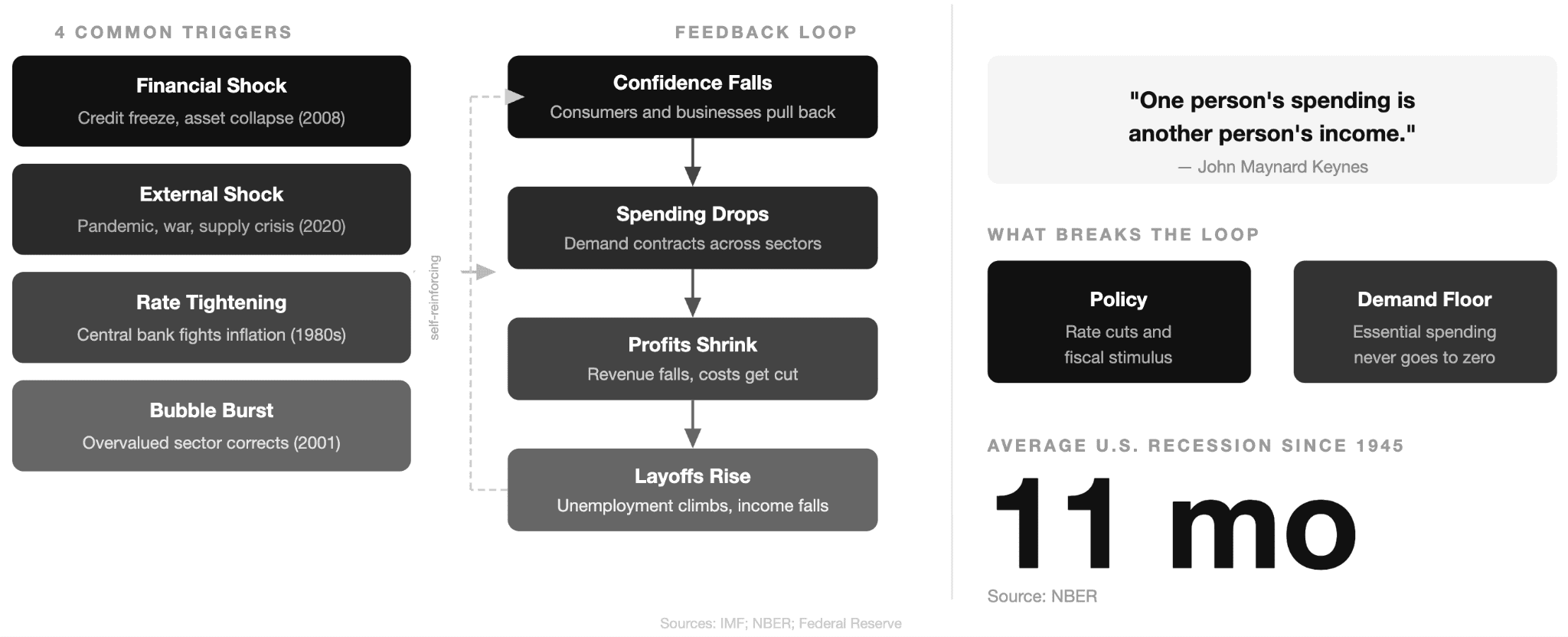
How a recession happens is one of the most-searched economic questions. No two downturns share the same trigger. What they share is a feedback loop that turns an initial shock into a broad contraction.
The Trigger Phase
Recessions typically begin with one of four forces. A financial shock, like the 2008 housing collapse. An external event, like the COVID-19 pandemic. Aggressive central bank tightening to bring down the inflation rate, as in the early 1980s. Or the bursting of an asset bubble, as with the dot-com crash in 2001. Each force disrupts spending, access to credit, or production in ways that ripple outward.
The Feedback Loop That Deepens the Downturn
Once the initial shock hits, a self-reinforcing cycle takes hold. Falling consumer confidence leads to reduced spending. Lower spending cuts into business profits. Companies then freeze investment activity and reduce payroll. Higher unemployment reduces household income. That puts more pressure on spending, further deepening the contraction.
Economist John Maynard Keynes described this as the paradox of thrift. Individually rational cutbacks collectively deepen the downturn. The cycle continues until policy intervention or a natural floor in demand breaks it.
Key takeaway: Recessions begin with a shock and deepen through a cycle of falling confidence, reduced spending, and rising unemployment. That cycle reinforces itself at every stage.
What Happens During a Recession, Sector by Sector