
Forex Trading

May 21, 2025 - 7 min

Beginner

Updated: Apr 29, 2026

What Are Pips in Trading? A Direct Guide to Reading and Using Them

What Are Pips in Trading? A Direct Guide to Reading and Using Them

Every forex price you see on a chart moves in small, measurable units called pips. New traders often skip past this concept too fast. If you do not understand what a pip is and what it is worth, you cannot calculate your risk accurately on any trade.

Justin Freeman
Reviewed by:
Share

Pips in Trading at a Glance: Key Facts

QuestionAnswer
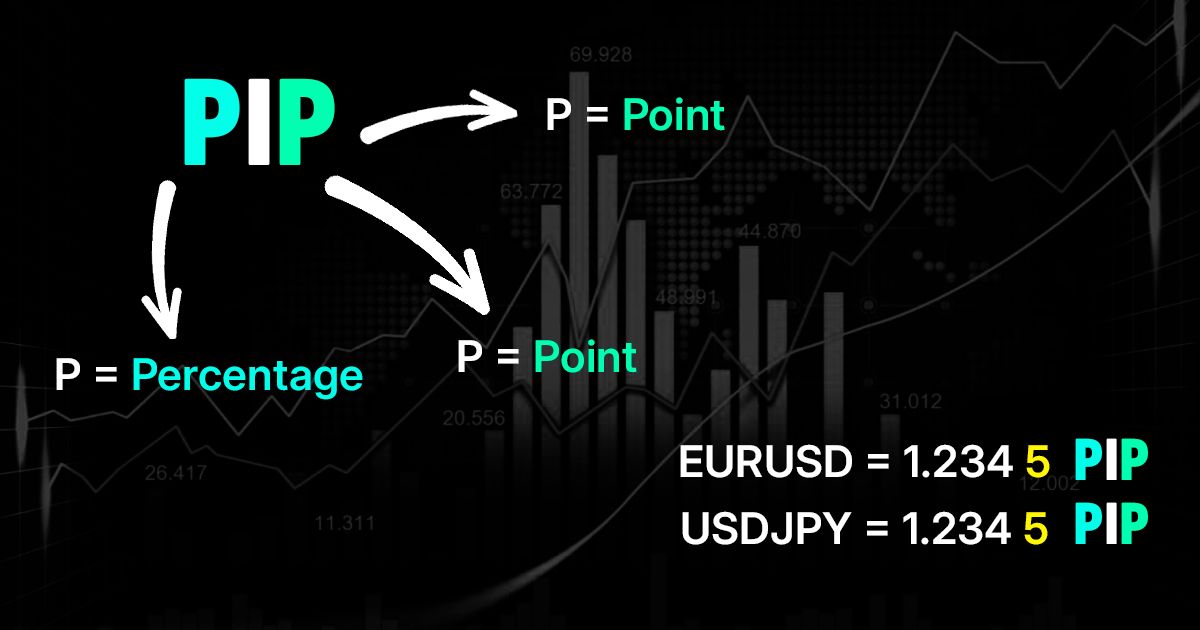
What does pip stand for?Percentage in point (also read as price interest point)
What is one pip in most currency pairs?A move of 0.0001, the fourth decimal place
What is one pip in JPY pairs?A move of 0.01, the second decimal place
What is a pipette?One tenth of a pip, the fifth decimal place
How is pip value calculated?(0.0001 / exchange rate) x trade size in units
What is the spread measured in?Pips, representing the cost between bid and ask price

What a Pip Actually Means in Forex

A pip is the standard unit forex markets use to measure price movement between two currencies. Every time a currency pair moves up or down, that movement is counted in pips. Without this unit, comparing price changes across different currency pairs with different decimal structures would produce inconsistent results and unreliable risk calculations.

The Definition Without the Jargon

Pips in trading represent the smallest standardized price increment used to quote currency pairs. For the vast majority of pairs, one pip equals a change of 0.0001 in the exchange rate. If EUR/USD moves from 1.1050 to 1.1051, that single unit of change is one pip.

The term stands for "percentage in point." Some sources use "price interest point" interchangeably. The meaning stays the same either way. What matters practically is that pips give you a consistent language to describe price movement, calculate trade results, and set stop-loss and take-profit levels.

Why the Fourth Decimal Place Matters

Currency exchange rates are quoted to four decimal places in most pairs. One pip sits at that fourth position, representing one ten-thousandth of the quoted price. That level of precision exists because forex trades large volumes. A single pip on a standard lot of 100,000 units is worth approximately $10 in USD-denominated pairs. Small pip movements translate into real money at scale.

The Japanese yen is the main exception. JPY pairs are quoted to two decimal places, so one pip equals 0.01. A move in USD/JPY from 155.00 to 155.01 is one pip. The structure is different, but the logic is identical.

Key Takeaway: A pip is the fourth decimal place in most forex currency pairs, and the second decimal place in JPY pairs. It is the standard unit markets use to measure price change. One pip on a standard lot equals roughly $10 in most USD-denominated pairs.

How Pip Value Is Calculated

Knowing what a pip is and knowing what a pip is worth are two separate things. The value of one pip depends on three variables: the currency pair you are trading, the size of your position, and the current exchange rate. Getting this number right before you enter a trade is part of responsible position management.

The Formula Every Trader Needs to Know

The standard formula for pip value in trading is:

Pip value = (one pip / exchange rate) x trade size

For EUR/USD at 1.1050 with a position size of 10,000 units (one mini lot):

Pip value = (0.0001 / 1.1050) x 10,000 = approximately $0.90 per pip

For a standard lot (100,000 units), that figure scales to approximately $9.05 per pip.

In pairs where the US dollar is the quote currency, such as EUR/USD or GBP/USD, the pip value is always expressed directly in dollars. When the USD is the base currency instead, as in USD/CHF or USD/JPY, you divide the fixed pip size by the current exchange rate first.
Become a Confident Trader

Master trading with our structured course designed for beginners and intermediate traders.

Step-by-step lessons
Real strategies
Risk management training

Join 10,000+ traders improving their skills

Start Course Now

Pip Value by Currency Pair

The table below shows approximate pip values for one standard lot (100,000 units) at current exchange rate levels as of April 2026.

Currency PairPip SizeApprox. Pip Value (1 standard lot)
EUR/USD0.0001$10.00
GBP/USD0.0001$10.00
USD/JPY0.01$6.45
USD/CHF0.0001$11.20
AUD/USD0.0001$10.00
USD/CAD0.0001$7.35

Note that JPY pair pip values shift as the USD/JPY exchange rate changes. A move from 150.00 to 155.00 changes the pip value by a visible margin. Always recalculate before entering a large position in yen pairs.

Most trading platforms calculate pip value automatically. That is not a reason to skip understanding the math. If your platform shows you a number, you need to know whether that number is correct for your lot size and account currency.

Key Takeaway: Pip value depends on your currency pair, position size, and exchange rate. For most USD-denominated pairs on a standard lot, one pip equals approximately $10. JPY pair values differ and shift with the exchange rate. Always verify the pip value before sizing a position.

Pips, Pipettes, and Spreads: What Connects Them

Pips fx traders encounter daily are often displayed alongside two related concepts: pipettes and spreads. Both use pips as their base unit. Knowing how they connect helps you read any price quote and understand exactly what you pay when you enter a trade.

What Is a Pipette?

A pipette is one tenth of a pip. Where a standard pip sits at the fourth decimal place (0.0001), a pipette sits at the fifth (0.00001). Most modern brokers quote currency pairs to five decimal places, which means the price you see already includes pipettes.

If EUR/USD moves from 1.10505 to 1.10506, that is one pipette. Ten pipettes equal one pip. Pipettes are sometimes called fractional pips or points. They give you a more precise view of short-term price action, which matters most for scalpers and short-term traders who target small moves.

How the Spread Uses Pips

The spread is the difference between the bid price and the ask price of a currency pair. Brokers quote this difference in pips, and it represents your entry cost on every trade you open.

If EUR/USD has a bid of 1.10500 and an ask of 1.10502, the spread is 0.2 pips. On a standard lot, that 0.2-pip spread costs you $2 before price moves a single pip in your favor. Tighter spreads reduce your cost per trade. Wider spreads, common during low-liquidity periods or on exotic pairs, increase it.

Spreads are directly tied to pip value. A 2-pip spread on EUR/USD costs a standard-lot trader $20. That same spread on AUD/USD costs the same in dollar terms because both pairs share the same pip value structure. Knowing your pip value turns a spread from an abstract number into a concrete dollar cost.

Key Takeaway: Pipettes are one tenth of a pip and appear at the fifth decimal place. Spreads are measured in pips and represent the direct cost of entering any trade. Multiply the spread by your pip value to know your exact entry cost in dollar terms before you trade.

How Many Pips Do Currency Pairs Move Per Day?

Understanding pip value only gets you so far. The practical question every trader eventually asks is how far prices actually move in a typical session. Average daily pip ranges tell you what to expect from a pair and inform decisions about stop-loss placement, take-profit targets, and whether a pair fits your trading style.

Average Daily Pip Ranges in 2025-2026

Major pairs move between 50 and 150 pips on an average trading day. The figures shift with market conditions, economic events, and session timing.

As of April 2026, EUR/USD averages 79 pips per day while GBP/USD averages 100 pips per day, based on a 10-week average.

Currency PairAverage Daily Range (2025-2026)
EUR/USD79-87 pips
GBP/USD100-120 pips
USD/JPY50-90 pips
AUD/USD50-90 pips
USD/CAD50-90 pips

Volatility is not constant. EUR/USD moved into common high volatility territory in February 2026 after a period of lower movement, with the 10-week average daily range reaching 84 pips. News releases, central bank decisions, and geopolitical events can push a pair well beyond its average range in a single session.

What This Means for Your Position Size

Average daily ranges give you a reference point for stop-loss placement. If EUR/USD moves 80 pips on a typical day, a 10-pip stop-loss will get hit by normal intraday noise before a trend has time to develop. A stop placed inside the average daily range is not a risk management tool. It is a way to exit trades repeatedly without good reason.

Use the daily range to set realistic targets. If a pair averages 80 pips of movement, targeting 150 pips on a day trade requires an unusually large move. Targeting 30 to 50 pips sits within the probable range of that session's activity. Combining pip value with daily range data gives you the numbers you need to size positions and plan exits before the market opens.

Key Takeaway: Major currency pairs average between 50 and 150 pips of movement per day in 2025-2026. EUR/USD averaged 79 pips per day and GBP/USD averaged 100 pips per day as of April 2026. Use daily pip ranges to set stops and targets that reflect how far a pair realistically moves in a session.

Key Takeaways: What You Need to Know About Pips

A pip is the fourth decimal place in most forex pairs and the second decimal place in JPY pairs. Its dollar value depends on your pair, lot size, and exchange rate. For most major pairs on a standard lot, one pip equals approximately $10. Pipettes and spreads both use pips as their foundation, so understanding one unlocks the others. Daily pip ranges for major pairs in 2026 sit between 50 and 150 pips, giving you practical benchmarks for stop-loss and target placement.

Frequently Asked Questions

Disclaimer: This article is for informational purposes only and does not constitute financial advice. Trading involves risk and may result in loss of capital.

Related Articles

The First Move Is Yours

Discover how Supertrade can transform your trading career. Explore challenges, access instant funding, and join a growing community of Supertraders.

Stay Ahead of the Game

Sign up to receive exclusive tips, market insights, and the latest updates from Supertrade. Don’t miss out on opportunities to grow your trading success.
Discord

Our Community

Do not skip any beat.

The Ultimate Trading Community. Join our Discord server to get the latest updates, news and more.

2026 Supertrade. All rights reserved
DiscordFacebookInstagramTelegramYouTubeXTikTok
Trading involves significant risk. Past performance is not indicative of future results. This is a simulated trading environment. Supertrade provides educational trading services.
Supertrade
Supertrade Ltd, a company incorporated under the laws of Saint Lucia with registered number 2024-00699, located at Ground Floor, Rodney Court Building, Rodney Bay, Gros Islet, Saint Lucia, LC01 101, operates and owns this website, as well as provides services under the Terms and Conditions posted on the website. Supertrade Prop Ltd, a company incorporated under the laws of England and Wales with registered number 16234284, located at 52-56 Standard Road, London, England, NW10 6EU, acting as a payment agent.
