En
En Es
Es

Best Trading Blogs at a Glance: Key Facts
| Question | Answer |
|---|---|
| What are trading blogs? | Regularly updated websites where traders and analysts share strategies, market analysis, and education |
| Who writes the top ranked blogs? | Active traders, prop firm educators, and professional market analysts |
| What topics do the best blogs cover? | Technical analysis, trading psychology, risk management, and live market commentary |
| How often are top trading blogs updated? | The highest authority blogs publish daily or several times per week |
| Do any top trading blogs also run podcasts? | Yes, Chat With Traders and Top Traders Unplugged are leading examples |
| Are top trading blogs free to read? | Most publish free content, with optional paid tiers for premium signals or courses |
What Makes a Trading Blog Worth Reading?
Not every site that publishes market content qualifies as a high-value resource. The trading blogs that consistently help traders improve share two measurable traits: documented authority and genuine market relevance. If a blog fails on either point, the time you spend reading it does not translate into better trading decisions.
Authority and Track Record
A blog earns authority through the credentials of its writers and the depth of its analysis. Look for authors who have traded professionally, managed real capital, or published peer-reviewed research on markets. Brett Steenbarger, who writes the TraderFeed blog, holds a PhD in clinical psychology and has served as a performance coach at major financial institutions. Peter Brandt has traded futures since 1975 and documents every trade publicly on his Factor Trading blog. These are verifiable records, not marketing claims.
Domain authority is one measurable signal of a blog's ranking position and external credibility. According to FeedSpot's 2026 trading blog index, DailyFX holds a domain authority of 80, TradingView scores 88, and SMB Capital sits at 42, all placing them well above average for financial content sites.
Update Frequency and Market Relevance
Markets change daily. A blog that publishes once a month cannot serve as a primary source for active traders. The highest ranked blog trading resources publish multiple times per week, and many update intraday during key economic events. DailyFX, for example, provides real-time analyst commentary during Federal Reserve meetings and Non-Farm Payroll releases, which are among the most market-moving events traders track.
Relevance means the content connects to what markets are doing now, not six months ago. Look for blogs that reference current price levels, recent central bank decisions, and updated economic data. A post about interest rate strategy written in 2023 carries far less weight when the rate environment has shifted materially in 2025 and 2026.
Key Takeaway
A trading blog is worth your time when its authors have verifiable experience and its content reflects current market conditions. Check the publication date of every post before applying its logic. A blog with high update frequency and documented author credentials is the baseline standard for any list worth following.
The Top Ranked Trading Blogs in 2026
The blogs below are selected based on domain authority, author credentials, content depth, and update frequency. Each covers a different area of trading, which means you benefit from reading more than one. The comparison table below shows where each fits in your reading list.
Comparison Table: Top Trading Blogs 2026
| Blog | Asset Focus | Best For |
|---|---|---|
| FXStreet | Forex, indices, commodities | Technical and fundamental traders |
| TradingView Blog | All markets | Visual learners, chart analysts |
| SuperTrade Blog | Stocks, forex, crypto, prop trading | Developing and prop traders |
| SMB Training Blog | Equities, options | Developing and prop traders |
| TraderFeed | Equities, futures | Trading psychology focus |
| TradingwithRayner | Forex, stocks | Beginners to intermediate |
| Option Alpha Blog | Options, equities | Options traders at all levels |
1. FXStreet

FXStreet is one of the longest-running independent forex and multi-asset analysis platforms on the web, publishing real-time market analysis, an economic calendar, and educational content across forex pairs, commodities, and indices. The site holds a domain authority of 78 and has built a social following of over 272,000 on Twitter, making it one of the most widely followed analyst platforms in the forex space. Contributors include professional analysts who cover central bank decisions, macroeconomic data releases, and live price action across the major currency pairs.
What separates FXStreet from aggregator-style news sites is the depth of its per-event coverage. Its analysts produce dedicated outlook pieces tied to specific policy decisions, including detailed breakdowns of Fed, ECB, and Bank of Japan positioning as rate cycles evolve. The site also runs live webinars with market analysts, which active traders can attend free of charge. For traders who rely on a combination of fundamental and technical inputs, FXStreet provides both in one place and updates content multiple times per day.
2. TradingView Blog
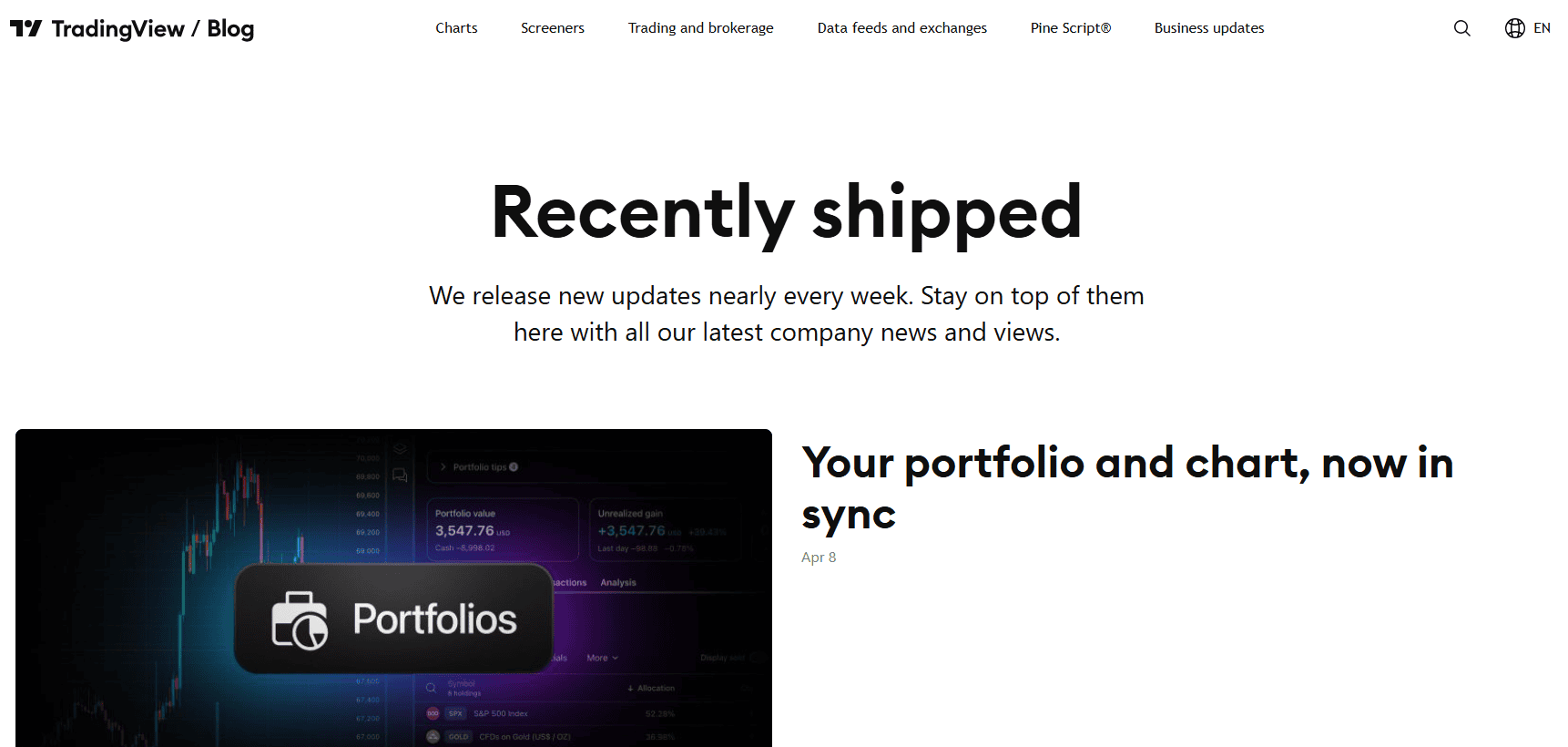
TradingView functions as both a charting platform and a content platform. Its published ideas section features annotated charts and written analysis from traders across all experience levels, covering forex, equities, crypto, and futures. The content volume is substantial. Contributors filter posts by trading style, including scalping, swing trading, and position trading, which lets you match the content to your own approach.
The community engagement layer separates TradingView from static blogs. Traders respond directly to analysis, ask questions about setups, and share counter-arguments. This interaction adds context that a one-way editorial blog cannot replicate.
3. SuperTrade Blog

The SuperTrade blog is published by SuperTrade, a proprietary trading firm incorporated in England and Wales, and covers the full range of topics a developing trader needs in one place. The blog organises its content across 11 categories including prop trading, technical analysis, trading psychology, AI in trading, and crypto, with over 78 published articles as of April 2026. Posts are updated regularly and carry timestamps, so you always know how current the information is.
What makes it stand out among prop firm blogs is the combination of practical application and market timing. Articles tie their analysis directly to live 2026 market conditions. The stop limit order guide, for example, references the S&P 500's 7% pullback from its all-time high in late March 2026 as a real context for the concepts it explains. That approach closes the gap between theory and execution in a way that generic education sites do not. The blog is also available in English, French, Spanish, and Portuguese, making it one of the few prop firm resources built for a genuinely international trading audience.
4. SMB Training Blog
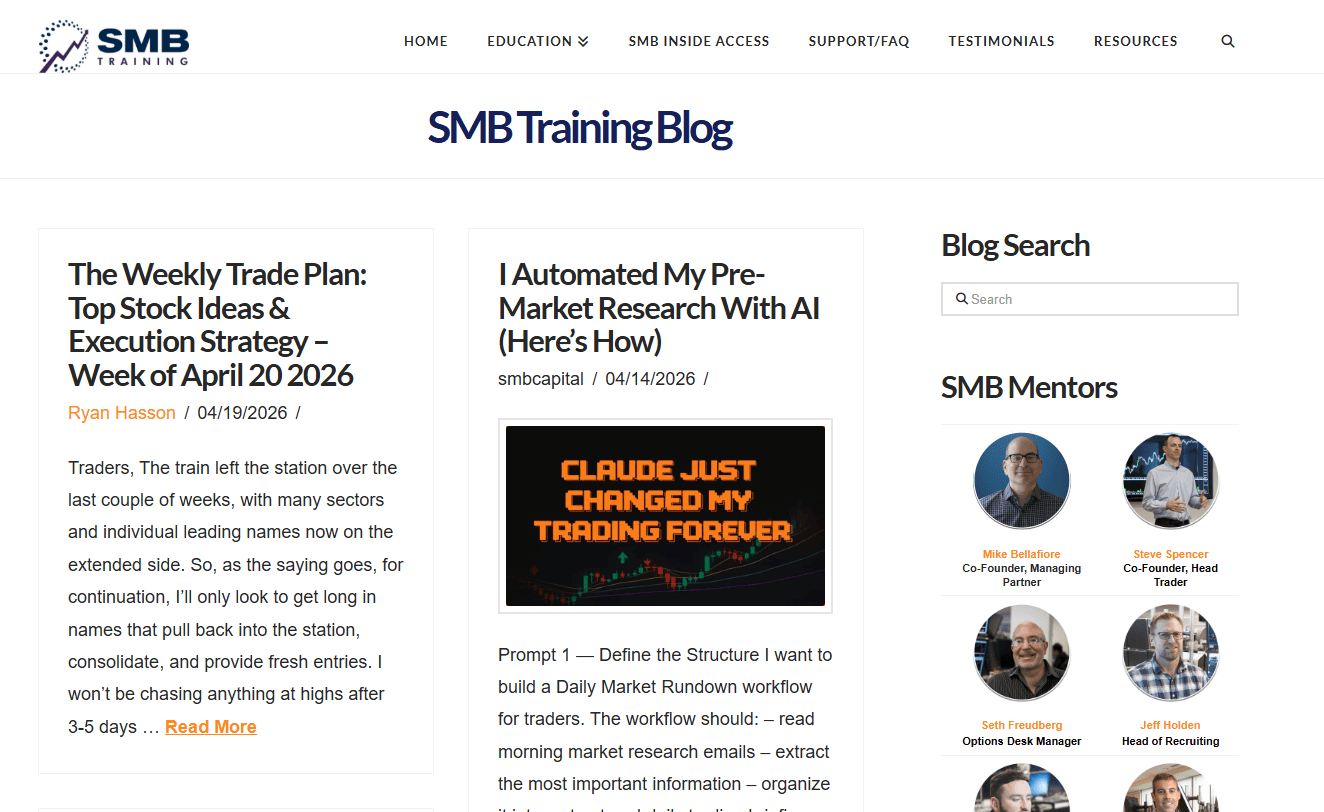
SMB Training Blog runs a New York-based proprietary trading firm and publishes its training content openly on its blog. Co-founders Mike Bellafiore and Steve Spencer write detailed breakdowns of real trades, including the decisions that went wrong and what they adjusted afterward. The blog's associated Twitter account currently has over 88,000 followers X, and the firm held its annual NYC Trading Summit in March 2026, reflecting an active and growing community.