En
En Es
Es

After Hours Trading: Key Facts
- Post-market runs until 8:00 p.m. ET
- Premarket starts at 4:00 a.m. ET
- ECNs execute all extended trades
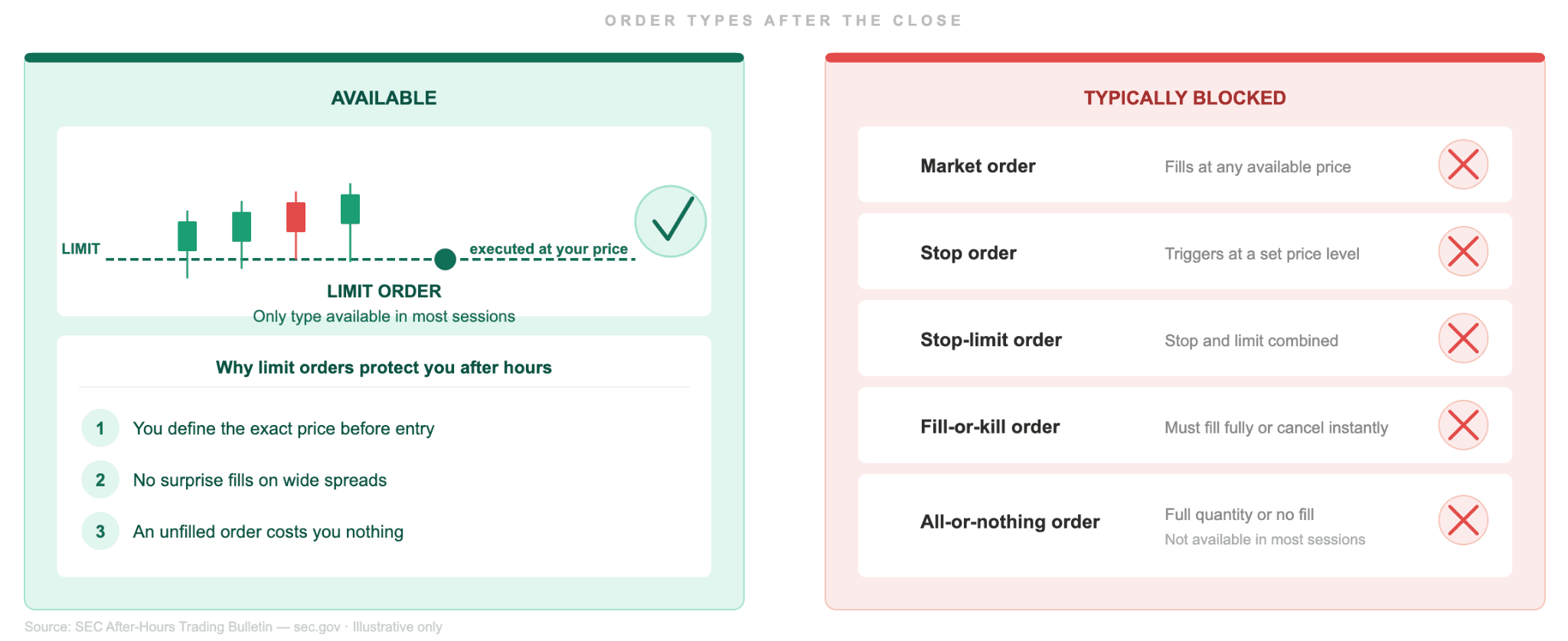
- Most sessions accept limit orders only
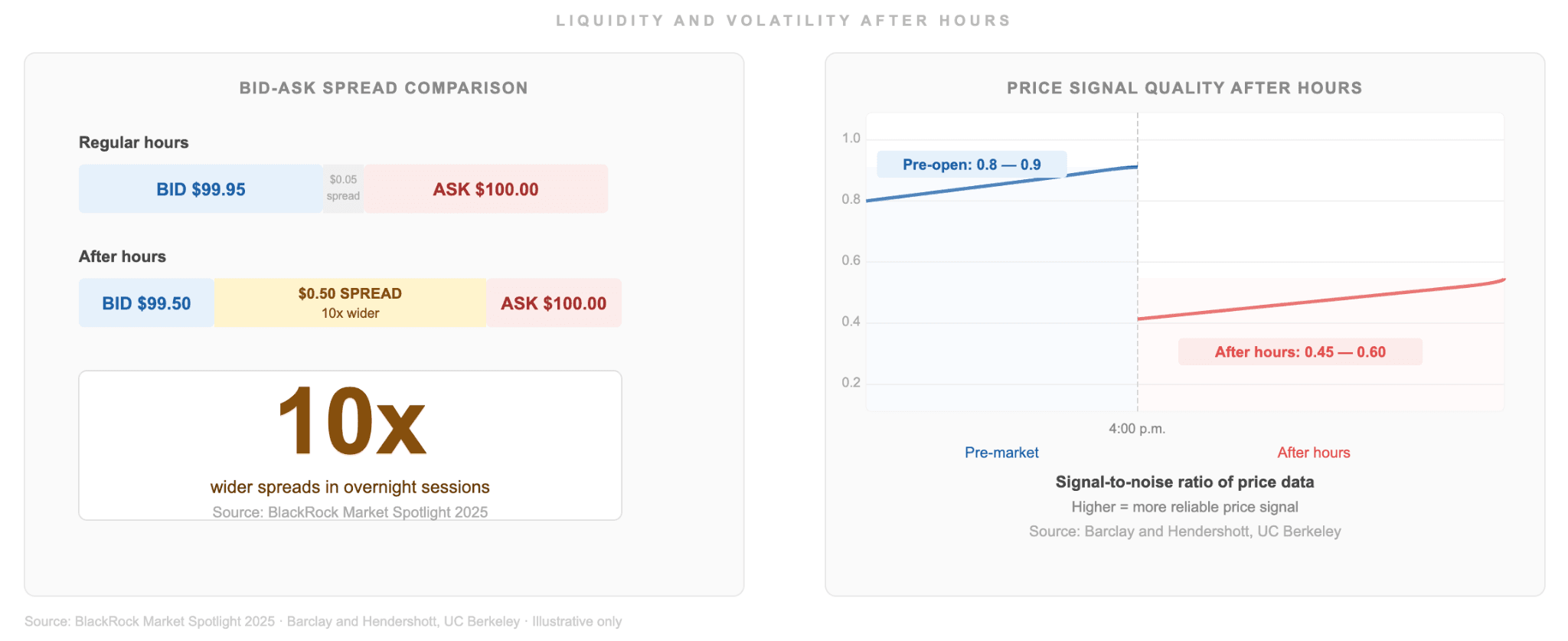
- Spreads run nearly 10x wider
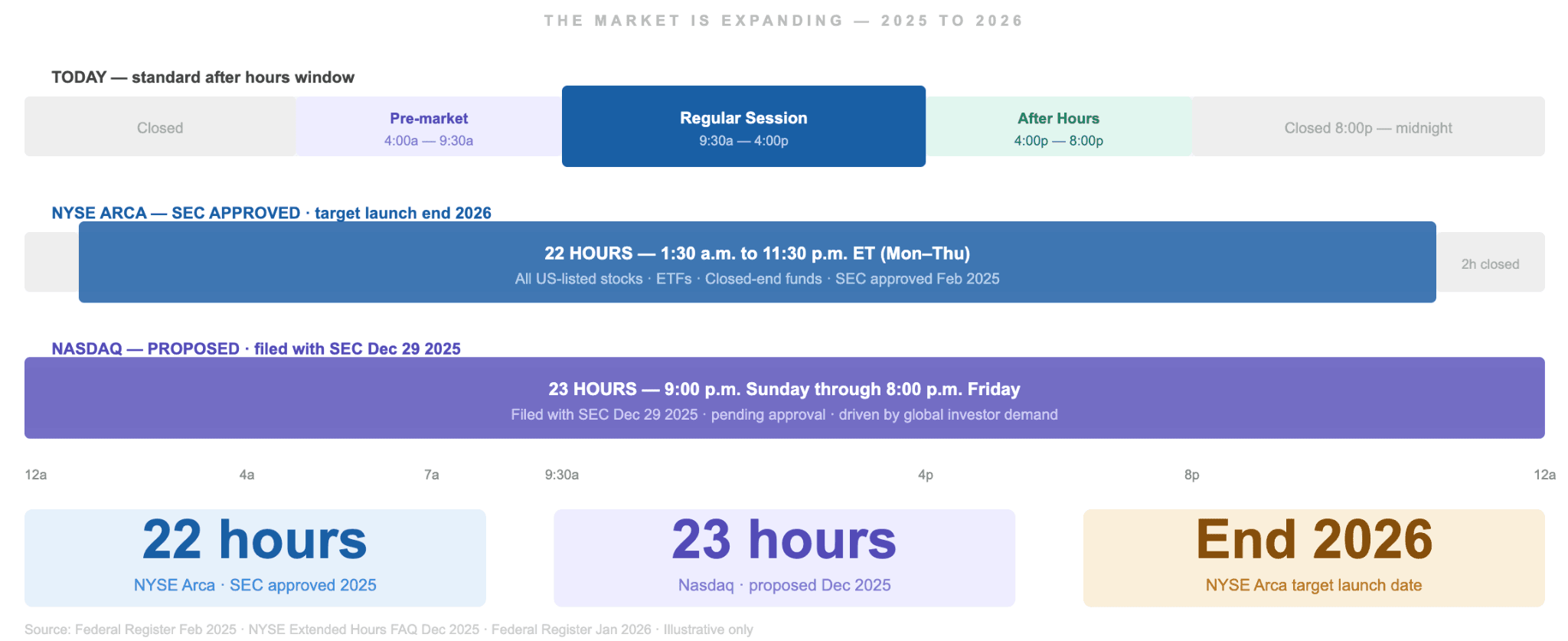
- NYSE Arca expanding to 22 hours
What After Hours Trading Actually Is?
After-hours trading is buying or selling stocks outside the standard exchange session. It fills the gap between market close and the next open. Prices still move. News still lands. The rules change entirely.
The sessions on either side of the regular day each serve a different purpose. Understanding that structure is the first step before placing any order outside normal hours.
Regular Trading Hours vs Extended Hours
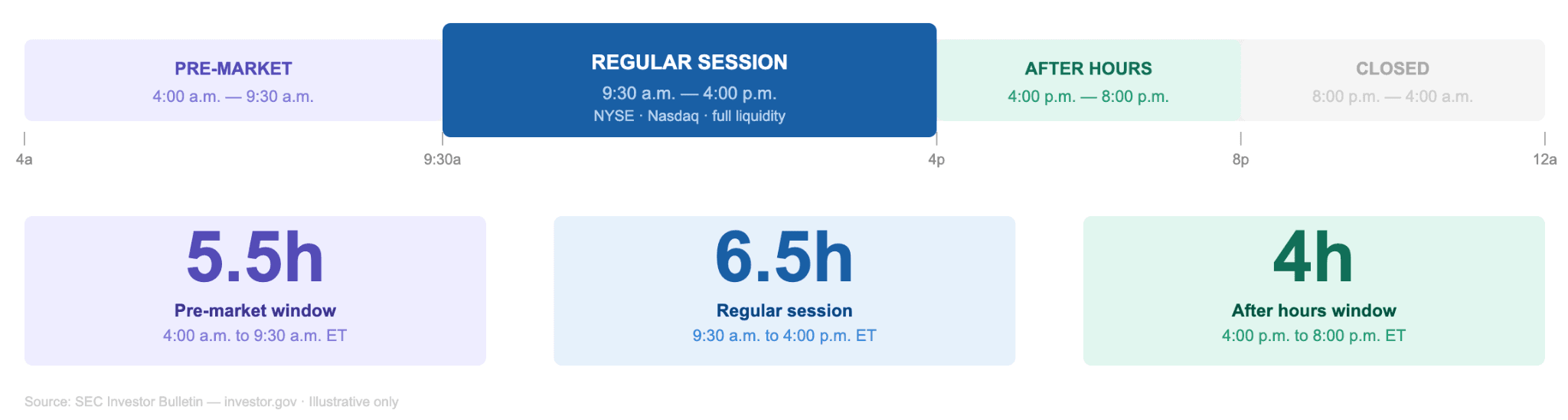
Regular trading hours run 9:30 a.m. to 4:00 p.m. Eastern Time on weekdays. The NYSE and Nasdaq operate with full market maker participation during this window. Liquidity is high. Pricing consolidates across all venues in real time.
The stock market's extended hours are split into two separate sessions:
- Premarket: 4:00 a.m. to 9:30 a.m.
- Post-market: 4:00 p.m. to 8:00 p.m.
- ECNs replace exchange order books.
- No market maker participation.
- Orders expire at session end.
Together, these sessions add roughly 11.5 hours of potential activity beyond the standard day. That extra time comes with a completely different set of conditions than the regular session.
Who Uses After-Hours Trading and Why
After-hours markets attract a specific type of participant. Institutional traders adjust positions after earnings releases. Retail traders react to news they cannot act on during the day. International investors bridge time zone gaps that the US regular trading hours do not accommodate.
The SEC identifies three primary reasons individual investors enter extended sessions:
- Reacting to post-close earnings news
- Adjusting positions before travel
- Trading around work schedules
Nasdaq noted in its January 2026 SEC filing that investors in Asia and other foreign jurisdictions increasingly need real-time access during their own business hours. US regular trading hours overlap poorly with Asian and European business days. Extended sessions partially close that gap.
Key takeaway: After-hours trading extends activity into two windows, adding roughly 11.5 hours beyond the standard session. Premarket runs from 4:00 a.m. to 9:30 a.m. ET. Post-market runs 4:00 p.m. to 8:00 p.m. ET.
How After-Hours Stock Trading Works
After-hours stock trading does not run through NYSE or Nasdaq order books. It runs through a separate infrastructure layer. Understanding that layer explains why rules, risks, and outcomes differ from the regular session.
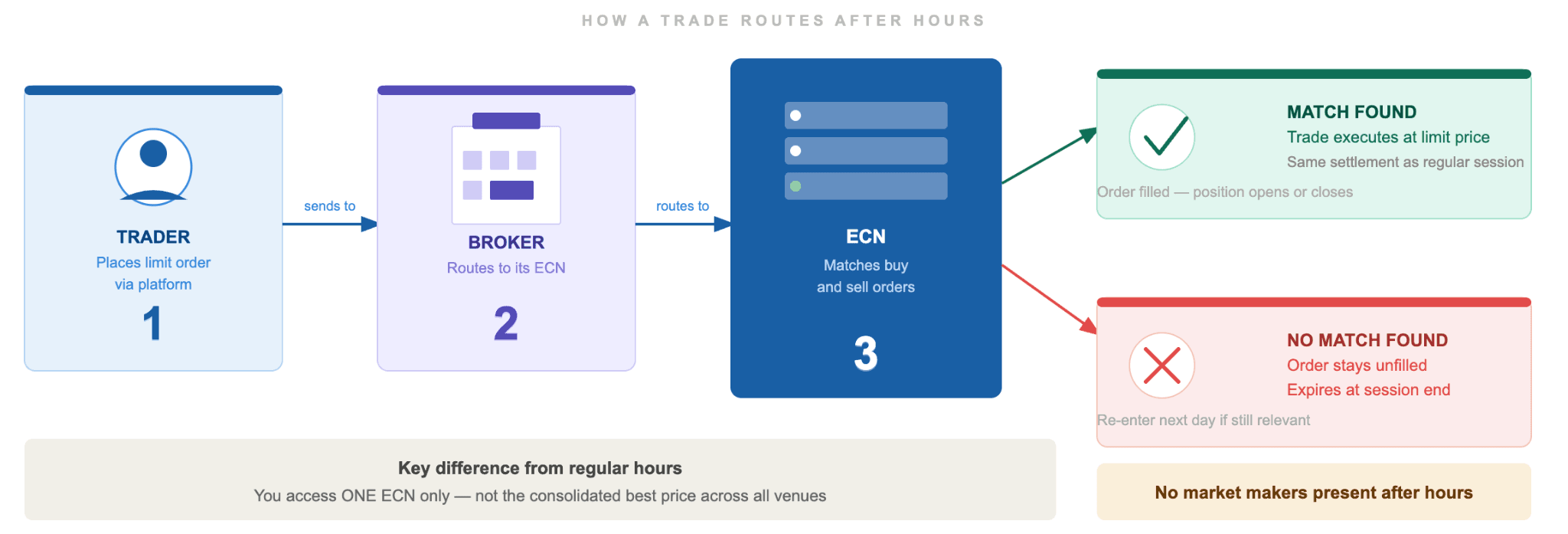
Every extended-hours trade passes through an ECN (an automated system that matches buy and sell orders). The ECN searches for a matching order on the other side. If it finds one, the trade executes. If it does not, the order stays unfilled until the session ends.
The Role of ECNs in Extended Sessions
An ECN is an automated system that matches buy and sell orders electronically. It works without human market makers. During regular hours, multiple ECNs and market makers compete for your order. That competition narrows, spreads, and improves execution quality.
In extended sessions, you connect to a single ECN through your broker. You do not access the consolidated best price across all venues. The SEC flags this directly as a pricing risk for retail traders. Your fill depends entirely on what orders exist on that one network.
After Hours Trading Hours by Exchange
After-hours trading hours follow consistent patterns across major US exchanges. The core post-market window is the same at NYSE and Nasdaq:
- NYSE post-market: 4:00 p.m. to 8:00 p.m.
- Nasdaq post-market: 4:00 p.m. to 8:00 p.m.
- Some brokers close earlier than 8:00 p.m.
- Orders after close need next-day re-entry.
- Platform cutoffs vary by broker.
Brokers set their own cutoffs within these windows. Some close at 6:30 p.m. Others extend to the full 8:00 p.m. boundary. Checking your specific platform before placing an order matters.
Order Types Available After the Close