En
En Es
Es

Five Things Every Trader Should Know About SMA
Before getting into mechanics, here are the key facts to remember:
- SMA averages closing prices
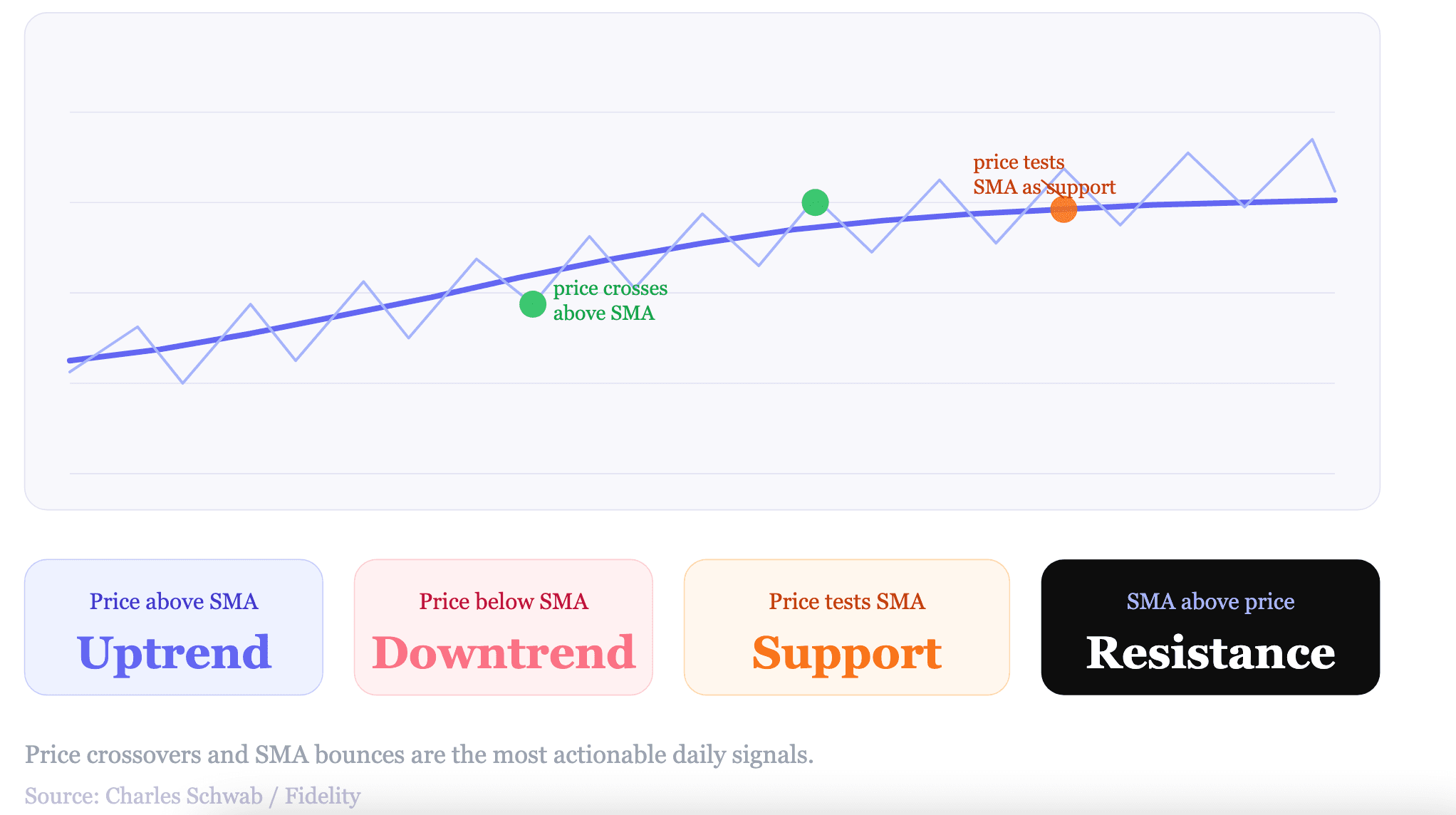
- Rising SMA signals an uptrend
- Falling SMA signals a downtrend
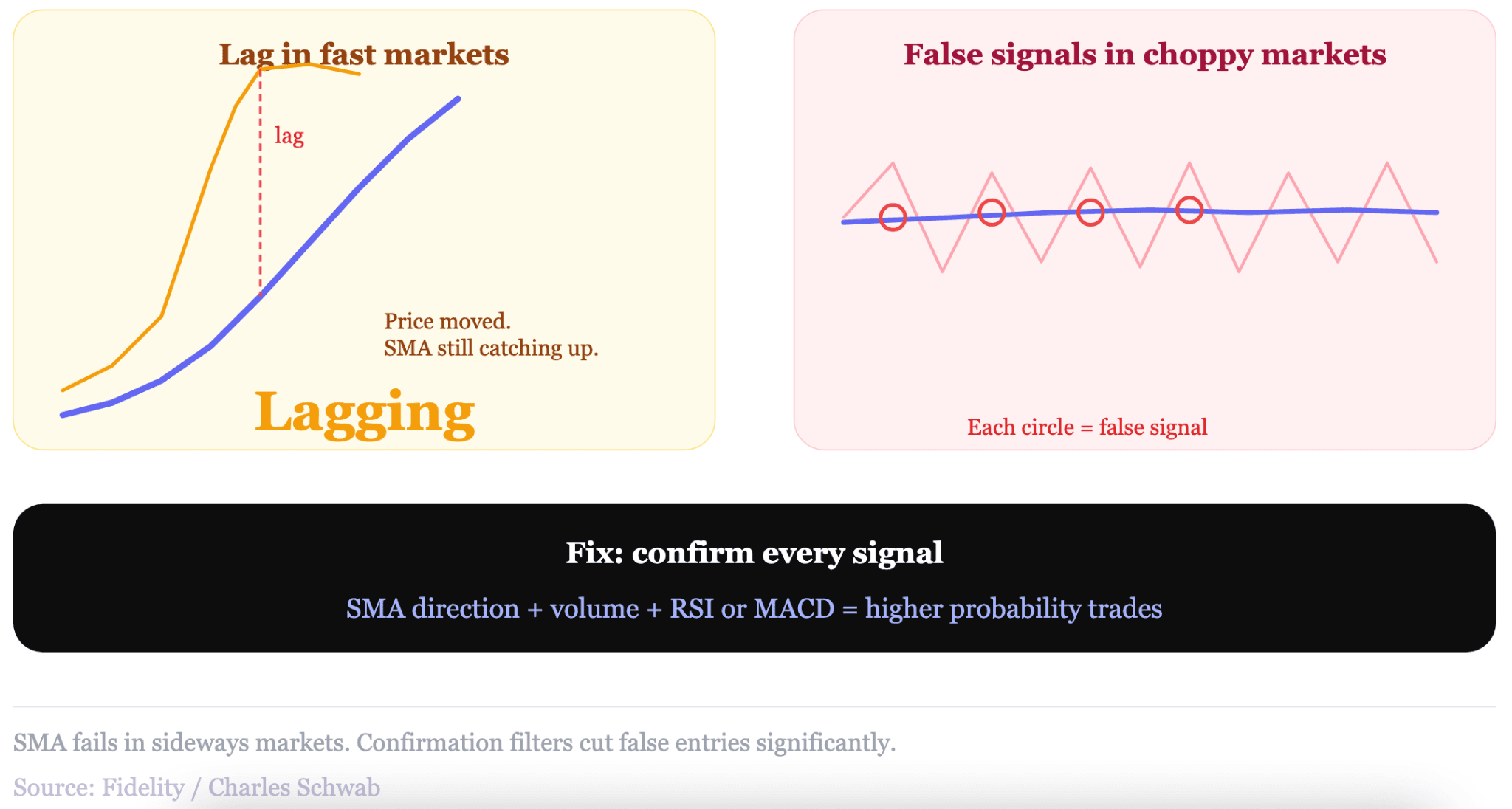
- SMA is a lagging indicator
- Short periods react fast, long periods run smoothly
The most common SMA periods are 10, 20, 50, 100, and 200 days. Fidelity describes SMA as the easiest moving average to construct in technical analysis. The 200-day SMA is the standard long-term benchmark used by institutional traders worldwide.
Key takeaway: Most traders spend more time picking entries than picking periods—the period you choose shapes every signal SMA gives you. Get the period wrong, and the tool works against you, not for you.
What Is the SMA Indicator
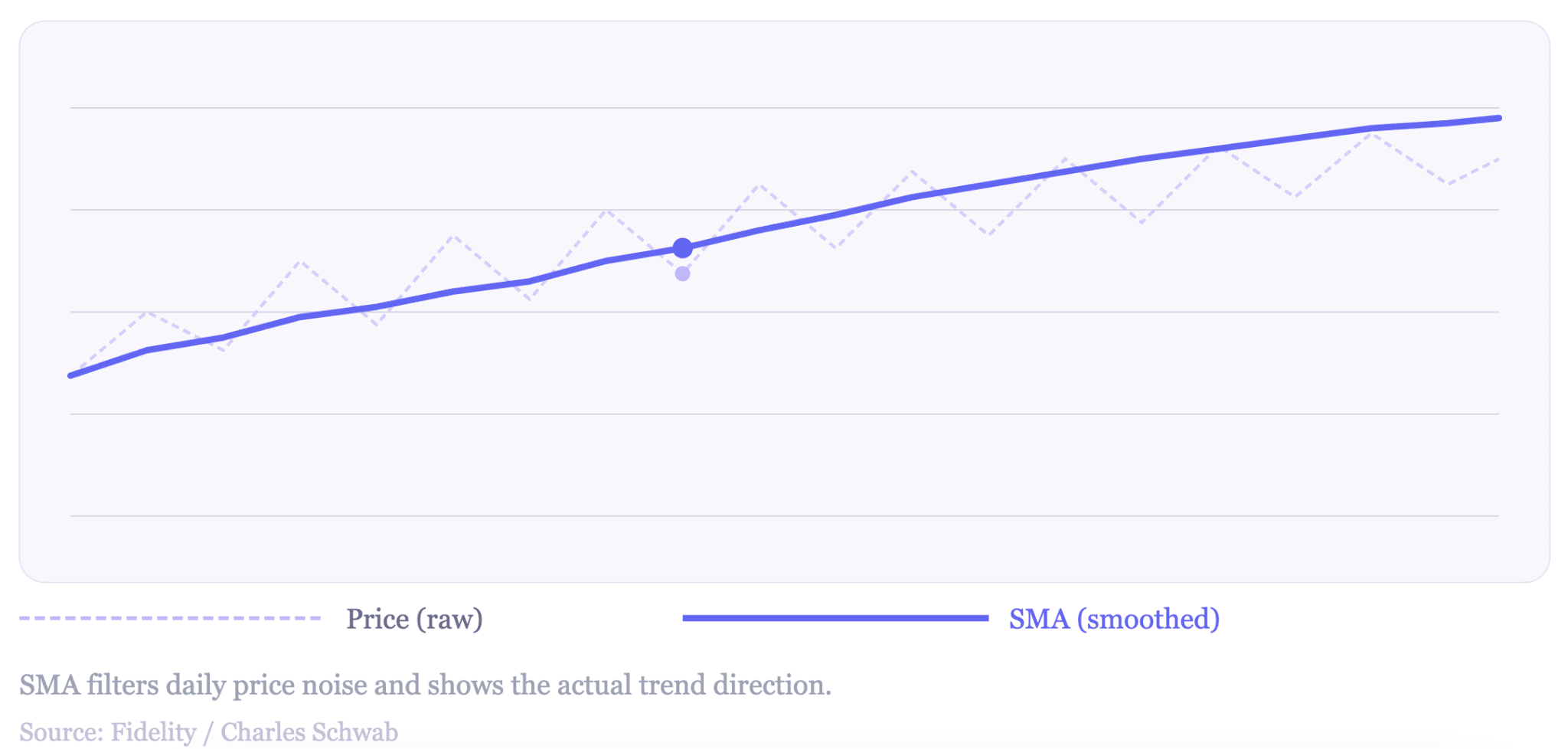
The SMA indicator shows the average closing price of an asset over a chosen number of periods. Each new bar adds the latest price and drops the oldest one. Fidelity explains that SMA forms a line that moves along the chart as the average value changes. That moving line is what traders use to read trend direction, spot support and resistance, and time entries and exits.
Charles Dow used moving averages to analyze stock market trends in the early 1900s. That makes SMA one of the oldest tools in technical analysis. Its logic has not changed since then.
SMA Formula and Calculation Step by Step
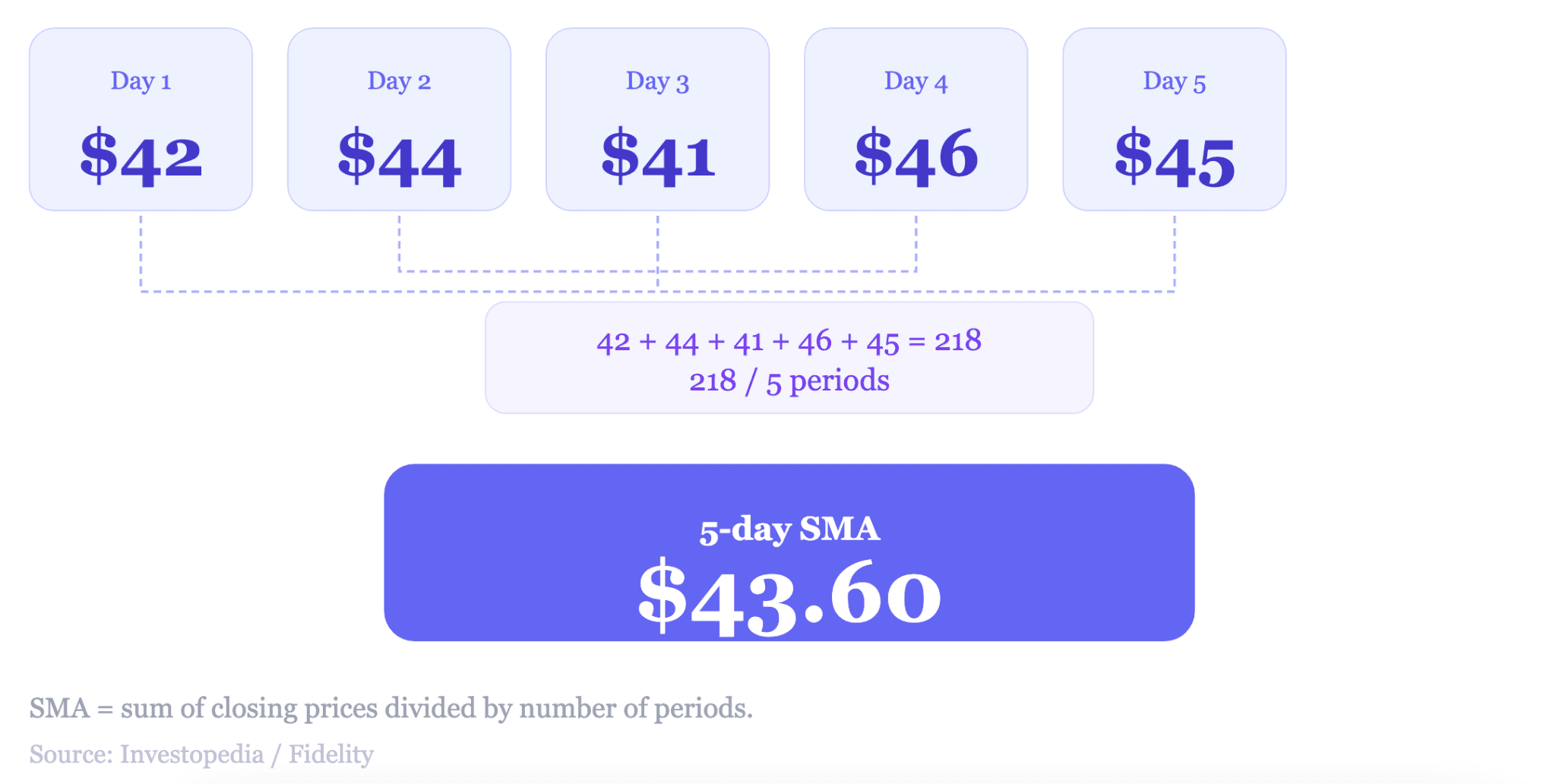
The Simple Moving Average formula is straightforward. Divide the sum of closing prices by the number of periods. Take a stock that closes at $42, $44, $41, $46, and $45 over five days. Add those prices together, and you get $218. Divide by 5, and the SMA lands at $43.60.
On Day 6, the price closes at $48, and Day 1 drops out. The new five-day SMA becomes $44.80. The average shifts forward one period with every bar. Shorter periods follow the price closely. Longer periods smooth it out. Both use the same formula, and only the number of periods changes.
SMA vs EMA
SMA gives equal weight to every price in the chosen period. The exponential moving average places more weight on recent prices, making it react more quickly to new data. For short-term trading, EMA signals arrive earlier. For longer-term trend reading, SMA produces cleaner lines with fewer false entries.
Charles Schwab notes that SMA works better as a trend indicator on daily charts. It's built-in lag smooths price action over time. Most traders run both on the same chart. EMA for timing entries. SMA for reading the broader trend.
"Pick the period that matches how long you actually hold a trade, not how fast you want to be right."
Key takeaway: SMA is the arithmetic mean of closing prices updated bar by bar. What most traders miss is that the period is not a default setting. It is a decision that reflects your time horizon. Change the period, and you change what the indicator tells you entirely.
Best SMA Period for Your Trading Style
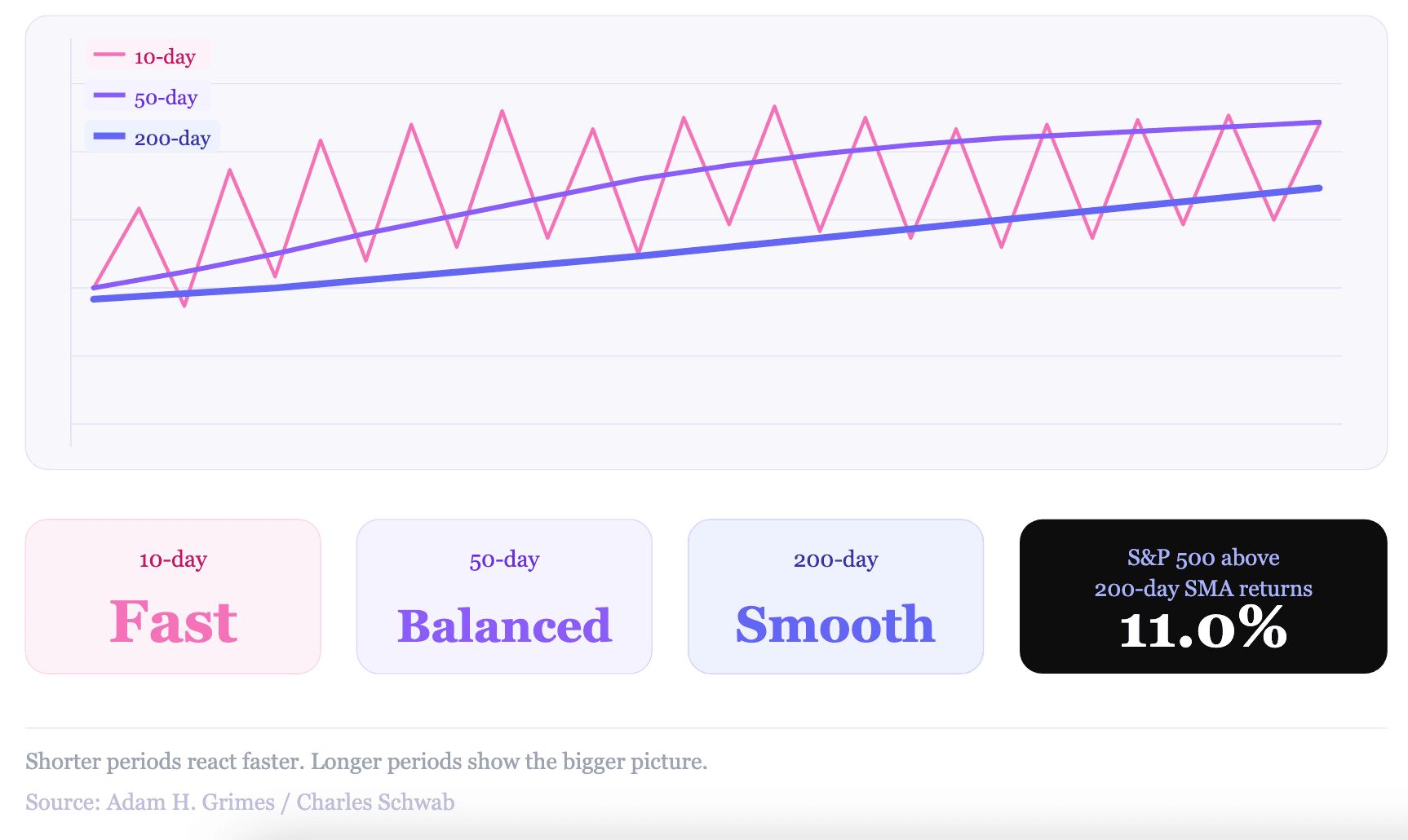
Choosing the right SMA period is the decision most traders get wrong first. Shorter periods react faster but generate more noise. Longer periods run cleaner but lag behind price. The right period depends on how long you plan to hold a position. Charles Schwab puts it directly: your trading time horizon determines which SMA period gives you useful information.
Short-Term SMA Periods 10 and 20 Days
The 10-day and 20-day SMAs track recent price momentum. They suit traders who hold positions for days or weeks. A rising 10-day SMA tells you buyers controlled the last two trading weeks. When price pulls back to the 20-day SMA and holds, that level often acts as a buying zone.