En
En Es
Es

AI Trading at a Glance: Key Facts
- What is AI trading? Software that analyzes market data, spots patterns, and executes trades without manual input.
- What AI tools do traders use? Predictive models, sentiment analyzers, automated execution bots, and risk management systems.
- Can AI replace human traders? Not fully. AI handles speed and data volume. Humans handle judgment, context, and unexpected events.
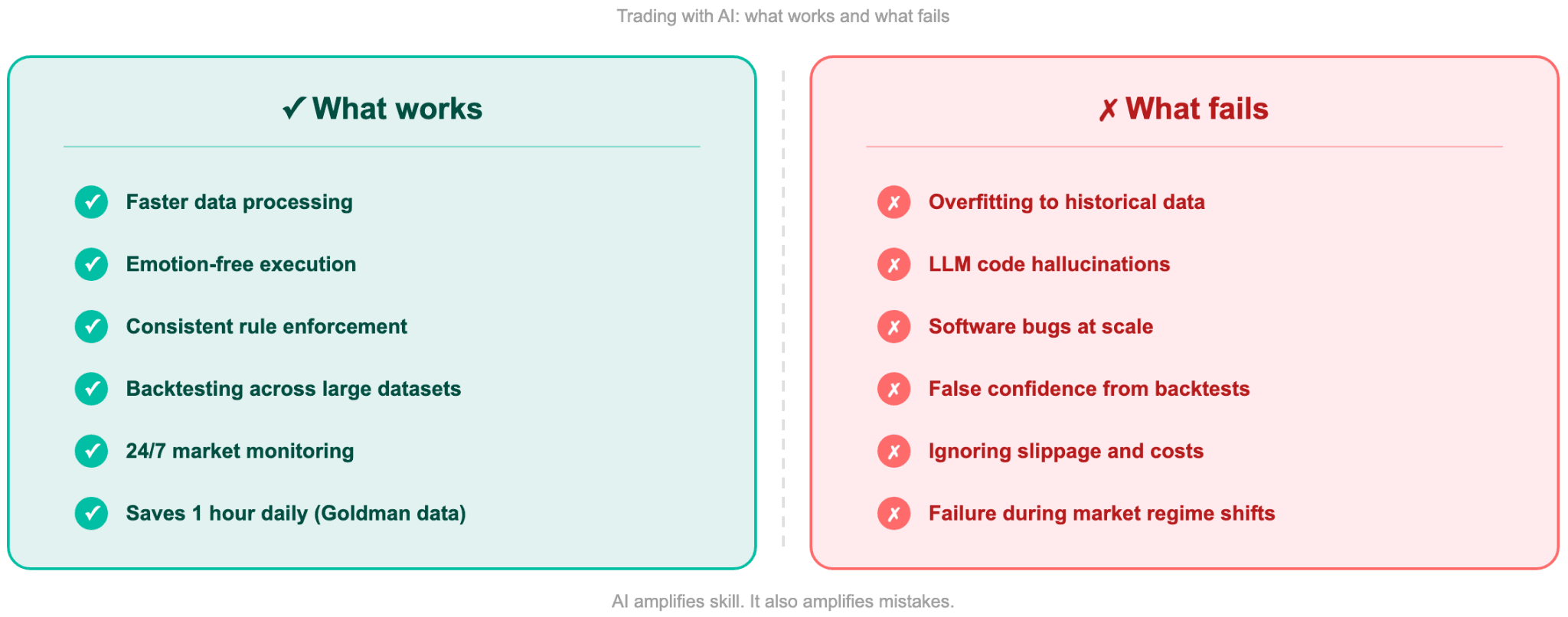
- Is AI trading profitable? AI improves accuracy and speed. It does not guarantee profits. Results depend on strategy and risk control.
- What are the main risks of AI trading? Overfitting to past data, software errors in live markets, and false confidence from backtested results.
What Is AI Trading and Who Uses It in 2026
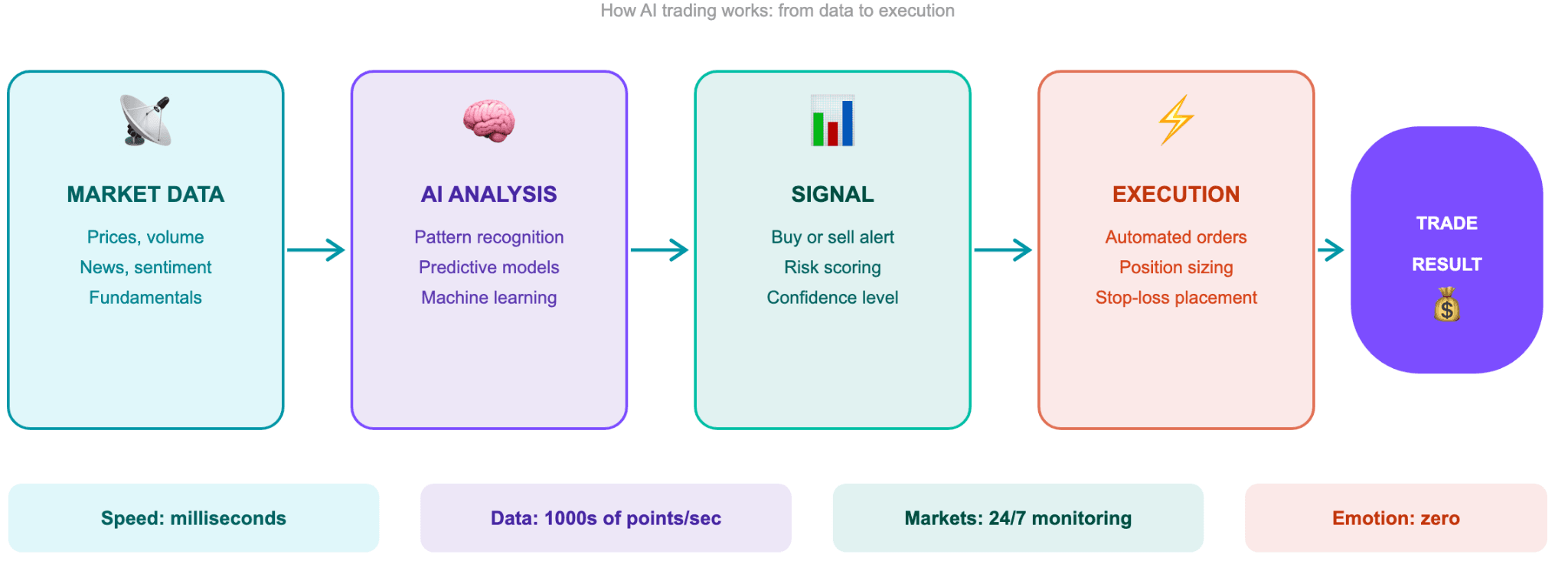
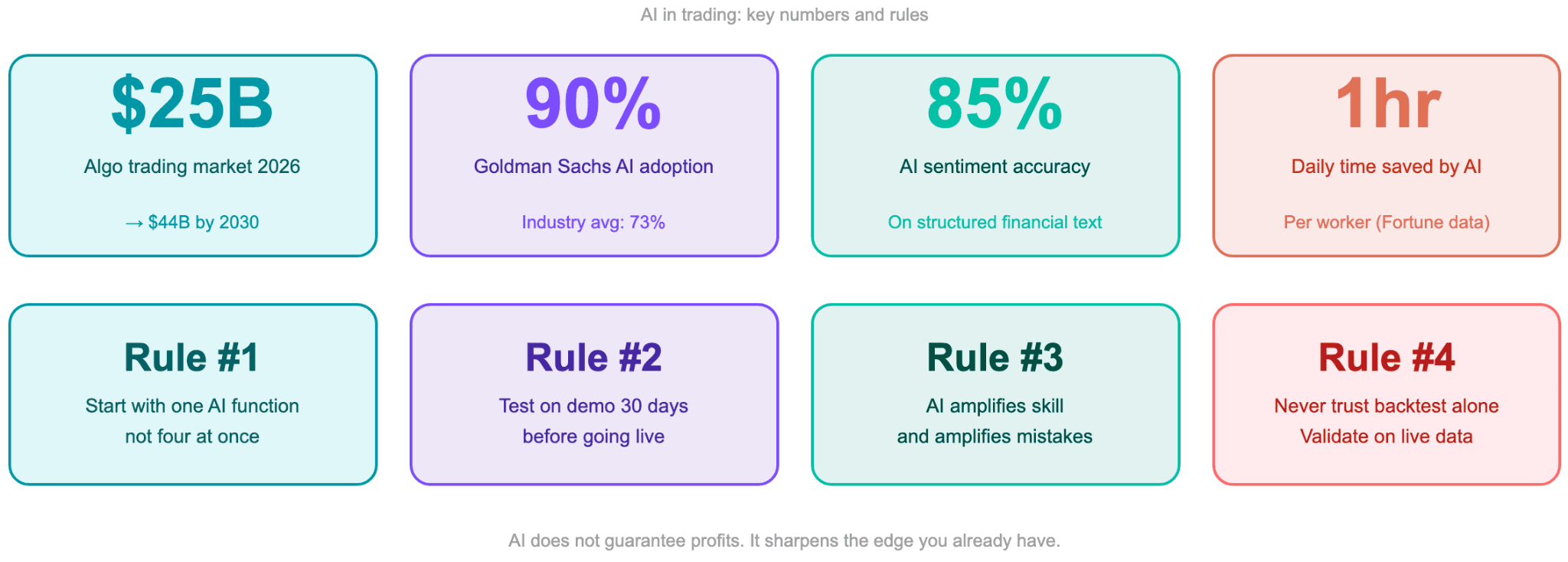
What is AI trading in practice? It means using machine learning models and algorithms to process market data faster than any human can. Banks, hedge funds, and independent traders all use some form of AI today. Goldman Sachs runs AI adoption above 90% across its operations. The technology is no longer experimental. It runs core functions at every major financial institution.
AI Trading Meaning in Simple Terms
Artificial intelligence trading replaces manual chart reading and gut-feel decisions with data-driven models. These models scan thousands of data points per second. They identify patterns that the human eye misses entirely.
A trader using AI does not sit idle. The trader sets the strategy, defines the risk parameters, and monitors the output. AI handles the repetitive analysis work. The trader handles the judgment calls. This division of labor is what makes ai and trading effective as a combination.
AI Trading Market Size in 2026
The global algorithmic trading market reached $25.04 billion in 2026. Projections put it at $44.34 billion by 2030, growing at 15.4% CAGR. The broader AI market hit $375.93 billion in 2026 across all sectors.
Financial services lead AI adoption by sector. Goldman Sachs deployed its AI Assistant to over 46,000 employees globally. JPMorgan's COiN platform processes legal documents in seconds that took lawyers 360,000 hours annually. Seven in ten financial professionals now use AI to support their trading decisions.
Key takeaway: AI trading means applying intelligent software to market analysis, pattern recognition, and execution. The market reached $25 billion in 2026 and grew at 15.4% annually. Major banks run AI across their entire operations. Individual traders access the same core technology through retail platforms and tools.
How People Use Artificial Intelligence in Trading Today
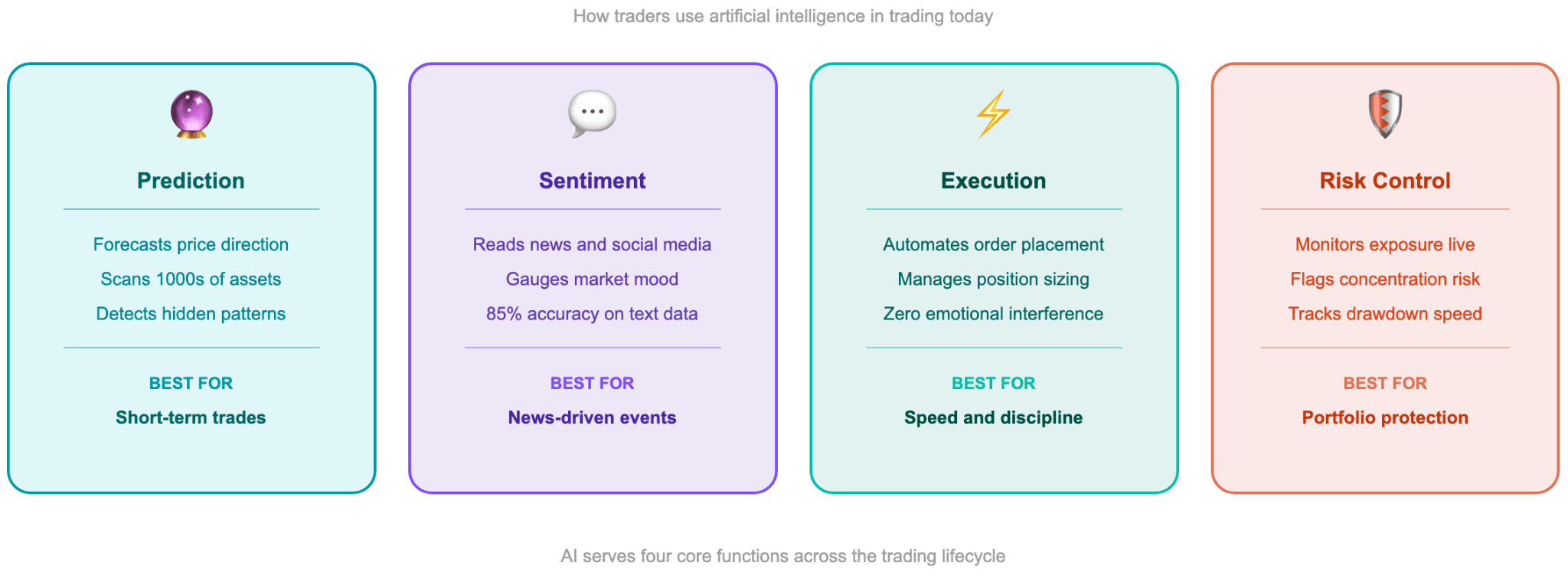
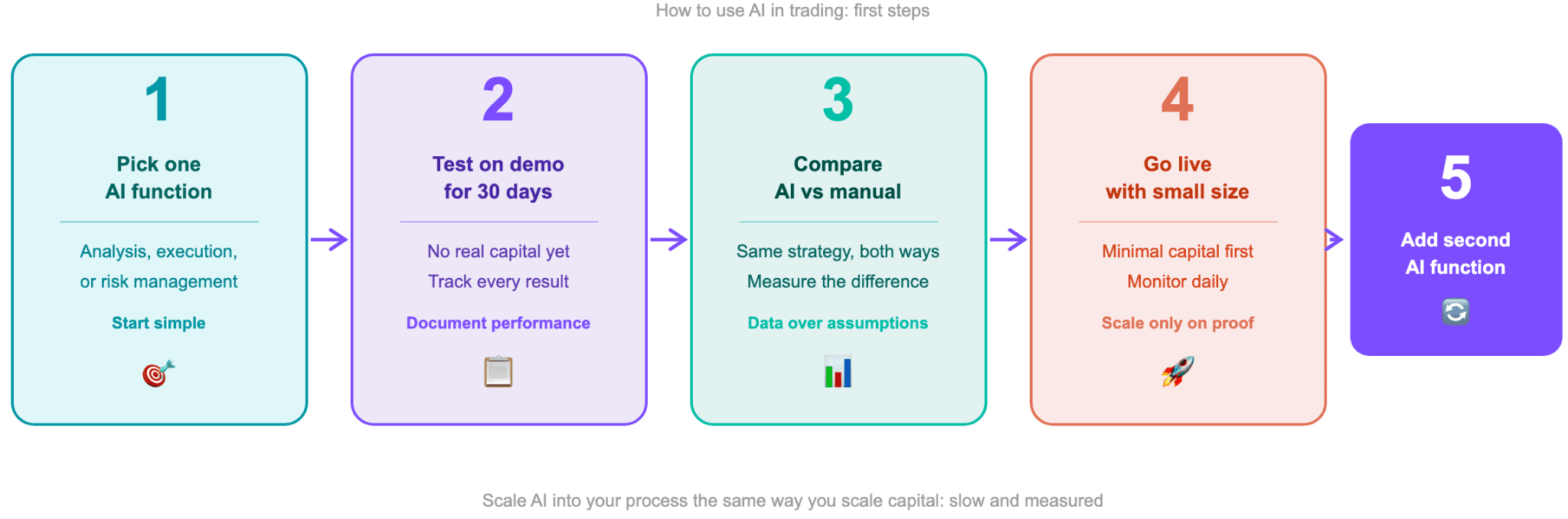
Artificial intelligence in trading serves four core functions across the trading lifecycle. Each function handles a different stage of the process, from raw data to live order execution. Traders combine these functions into a workflow that fits their strategy and market focus. No single AI tool covers all four stages well.
Predictive Analysis and Pattern Recognition
AI models scan historical price data, volume patterns, and technical indicators to forecast short-term price direction. Machine learning algorithms detect patterns across thousands of assets simultaneously.
These models work best on high-frequency data with clear statistical patterns. They struggle with low-volume assets and unprecedented market events. A model trained on 10 years of bull market data performs poorly during a sudden crash.
The practical application for retail traders includes:
- Price direction forecasts
- Volatility pattern detection
- Support and resistance mapping
- Correlation scanning across assets
Traders who combine AI predictions with their own market context get better results than those who follow AI signals blindly.
Sentiment Analysis Through Language Models
Large language models scan news articles, earnings calls, and social media to gauge market mood. AI sentiment analysis reached 85% accuracy on structured financial text by mid-2025.
This works well for earnings surprises and macro news events. It works poorly for sarcasm, cultural context, and narrative exhaustion. A positive earnings headline does not always mean a bullish reaction.
Institutional firms use real-time sentiment feeds. Retail traders typically access delayed data, which limits the edge. The gap between institutional and retail sentiment tools remains significant in 2026.
Automated Execution, Bots, and Risk Management
Automated execution systems place orders based on predefined rules. Bots monitor multiple markets, manage position sizes, and enforce stop-losses without emotional interference.